Showing posts with label 1991 Constitution. Show all posts

Monday, July 4, 2011

Colombia's Constitution Celebrates its 20th

Written in 1991 for a nation in crisis, Colombia's Constitution has weathered two decades and guided Colombia into an era of stability and economic growth.

When political leaders met in 1991 to write a new Constitution the state was under siege from cocaine king Pablo Escobar and other cartels. Powerful leftist guerrillas and right-wing paramilitaries forces appeared capable of chopping the country into separate regions of influence.

The '91 Constitution was written in part in response to demands by drug cartel leaders for an end to the practice of extraditing drug traffickers to the United States for trial and imprisonment. Accordingly, extradition was prohibited by the Constitution and Escobar soon after agreed to go to prison - in the luxurious La Catedral, which he'd built for himself. (An amendment later restored extradition, and today Colombia is a world leader in extraditing its citizens for trial overseas.)

Among other changes, the '91 Constitution:

- Changed Colombia from a Catholic to a secular nation and legalized divorce.

- Recognized certain rights for ethnic and other minority groups.

- Recognized fundamental economic, cultural and collective rights.
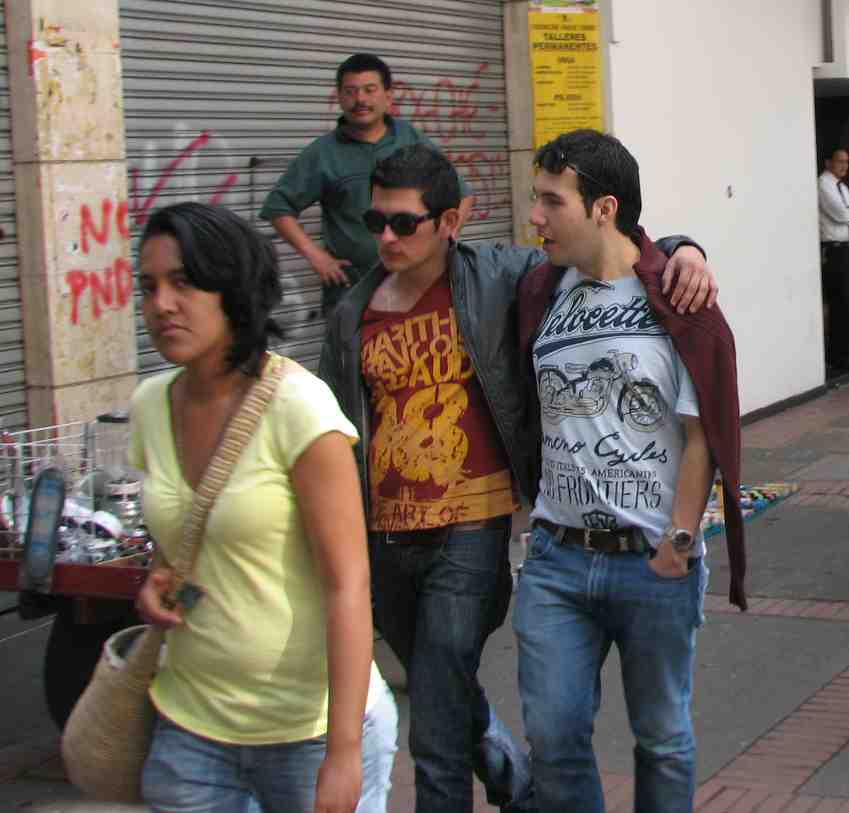
Almost equal rights: Colombian
courts have recognized
same-sex unions.
- Created the Constitutional Court, which has been a progressive force and asserted judicial independence, for example when it ruled against a possible second reelection for Pres. Alvaro Uribe. Court decisions also have recognized same-sex couples, legalized abortion and eutenasia in certain cases, recognized prostitution as a legitimate profession and legalized the carrying of a 'personal dosis' of drugs - since reversed by the legislature.

- Created the tutela, a powerful tool for citizens to demand rights.

- Created democratic mechanisms such as the referendum and popular actions.

- Eliminated parliamentary immunity - making possible prosecutions of congressmembers, as happened in the parapolitica scandal.

By Mike Ceaser, of Bogotá Bike Tours

Friday, February 4, 2011

A Colombian Historical Landmark

The little blue and yellow book
Twenty years ago tomorrow, Colombia began a convention which would rewrite the nation's Constitution.

Those were traumatic times for the country - in the preceding presidential election violent groups had murdered three presidential candidates, and drug cartels, paramilitaries and guerrillas had Colombian leaders and many others running terrified.

So, it seemed like an unlikely time for a broad range of political factions to sit down and rewrite the nation's Constitution. But, they did it, and the resulting document has lasted and brought surprisingly progressive changes to the country. Even though Colombia continues to have a conservative government and very Catholic population, its progressive Constitution has permitted surprisingly progressive changes, including advances for gay rights, depenalization of abortion in some cases and even, for a long period, depenalization of personal possession of drugs. It also changed Colombian from an officially Catholic to a secular nation and prohibited the practice of extradition - although that was reversed in 1997, and Colombia has since then become a world leader in extraditing its citizens to the U.S. to face narcotrafficking charges. The 1991 Constitution also gave Colombian citizens powerful new rights, in particular the tutela.

The constitutional convention was notable for the participation of the leftist M-19 guerrillas, who just six years before had attacked the Justice Palace, leading to a conflagaration in which nearly 100 people died. While Colombia's armed conflict continues, the ex-M-19 have since remained firmly integrated in democratic politics.

By Mike Ceaser, of Bogotá Bike Tours