|
| Researchers in San Agustin in 1946 (Photo: El Espectador) |
The Parque San Agustin in Huila Province is
celebrating the 100th anniversary of scientific research about the site's famed 2,000-year-old monoliths. For its own part, Bogotá's own San Agustin Park in the Santa Fe neighborhood is passing a more modest first birthday.
 |
| Monuments in San Agustin, Huila Province. |
Huila's San Agustin archeological park is the only place in Colombia with pre-Columbian monuments. But their makers remain a mystery. The people, called
Agustinianos after the present-day town nearby, created about 300 stone monuments between about the first and eighth centuries after Christ. Then, their civilization disappeared, perhaps pressured by the invasion of other peoples, climate change or other causes.
 |
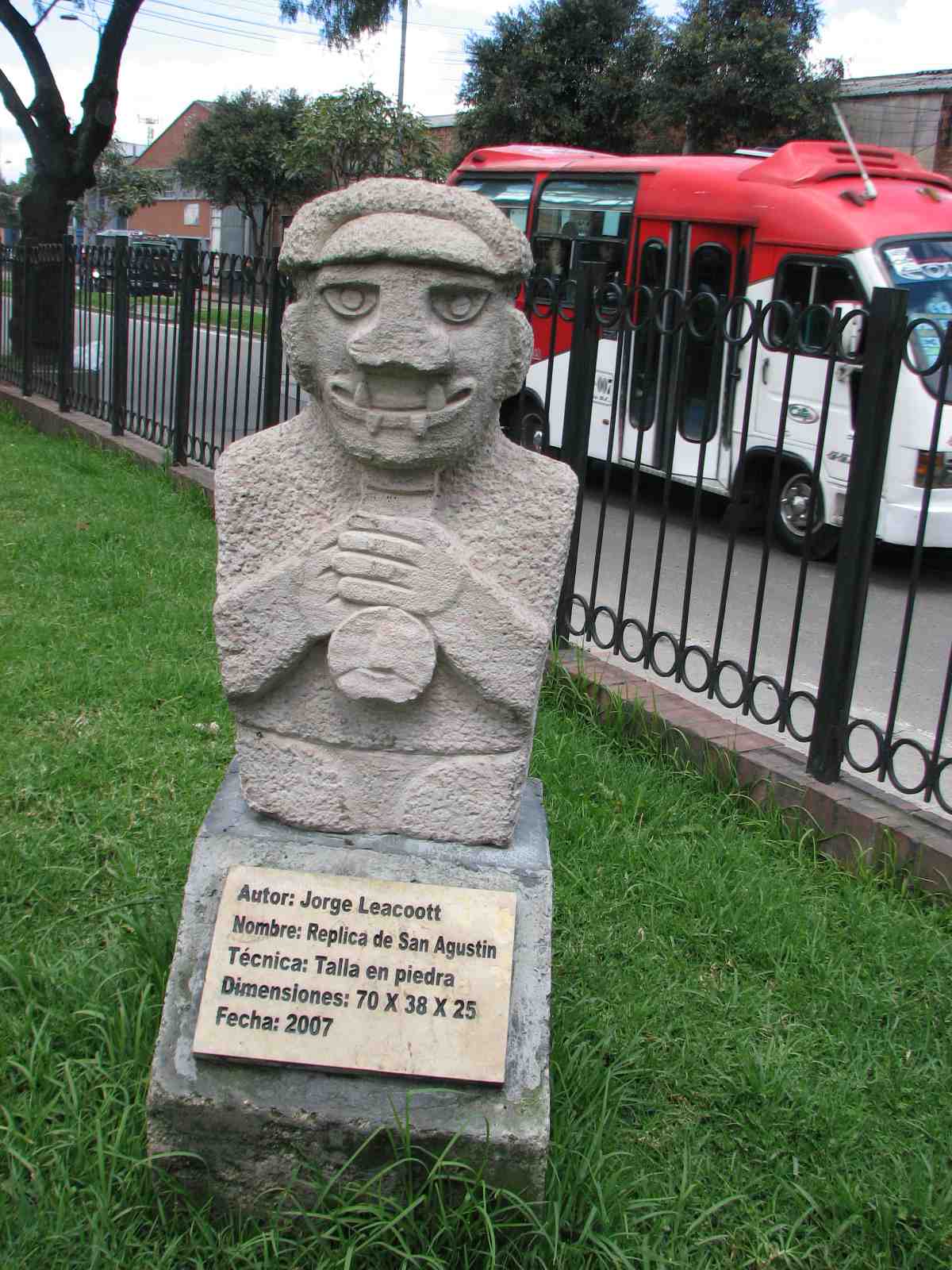
| San Agustin in Bogotá. |
The Swiss writer
Erich Von Däniken, who saw extraterrestrial influences in many ancient human civilizations,
credited aliens with influencing the ancient
Agustinianos. Others have theorized about
Mayan, Egyptian or even Viking connections. All those speculations, which have little evidence,
short-change the native Colombians, who undoubtedly were capable of creating magnificent stone monuments without outside help. Researchers theorize that the monuments were used for
ancestor worship and may have represented
reincarnation. Many mix human and feline charcteristics, suggesting the mixing of human and animal spirits. Perhaps the monuments provided
gateways between this world and the next.
 |
A bicycle tourist
beside the famous
'Doble Yo' figure. |
The monuments in Bogotá's own park, which is located in the very urban
Santa Fe neighborhood behind the Central Cemetery and just a few blocks from the red light district, have a better-known origin: They were created by local sculptors, including some of the people who carve headstones nearby.
For the rest of this year, the San Agustin Archeological Park in Huila plans to commemorate the Colombian and foreign archeologists who began researching the region in 1913. Research there continues, and probably will never end.
Perhaps more significant for us than the original
Agustinianos' origin was their
disappearance. Like the Mayans and the monument builders of Easter Island, the Agustinians were
replaced by a much simpler culture incapable or uninterested in creating such massive objects.
Did the original
Agustinianos fall victim to climate change? Overpopulation? War? Environmental destruction? We may never know. But, for a nation like Colombia challenged by many of these problems and others,
the Agustinianos' disappearance serves as a warning about preserving the environment and finding peaceable means to end conflict.
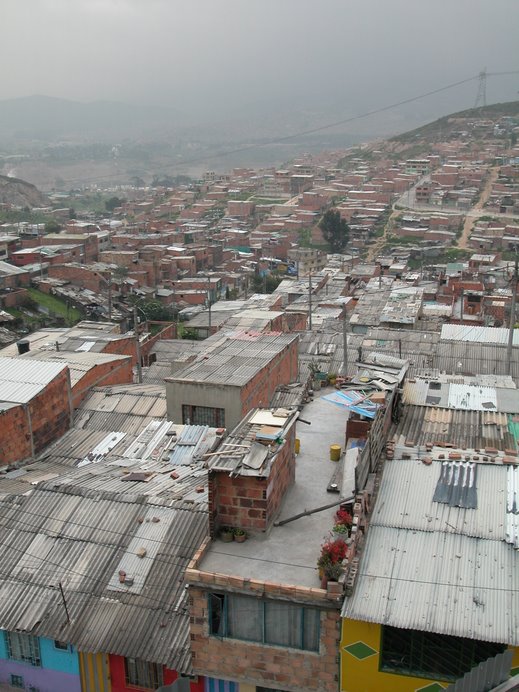
While Huila's San Agustin region appears bucolic, much of rural Colombia suffers from erosion, pollution, deforestation and desertification. And Bogotá's Santa Fe neighborhood captures many urban ills, including litter, air and noise pollution. Sometimes, it seems, cities like Bogotá are carrying out an experiment in how a species can poison itself in its own wastes.
 |
| This figure, in Bogotá's Santa Fe neighborhood, appears to suffer from an indeterminate gender. |
 |
| The Bogotá park is a green island amidst urban noise and pollution. |
 |
| Posing with a face. |
 |
| These figures might represent male midwives, or gods devouring infants. |
By Mike Ceaser, of
Bogotá Bike Tours

 Their absence is due to opposition by San Agustin area residents, who blocked the temporary transfer of some monuments to Bogotá, fearing that they could be damaged or not returned. The museum describes the locals' attitude as selfish. But the Sanagustinianos remember well that dozens of San Agustin statues were taken away in the early 1900s and remain in storage in Gemany.




 Posts
Posts