Showing posts with label extradition. Show all posts

Saturday, October 17, 2015

Grow a Leaf, Go to a U.S. Prison

FARC leader Timochenko, accused by the U.S. and Colombia
of  'controlling the production, manufacture, and distribution
of hundreds of tons of cocaine to the United States
and the world,' could soon be in Congress.
Alias Timochenko and other leaders of the FARC guerrilla group, which produces and traffics a big chunk of the world's cocaine (as well as committing countless other crimes), likely will receive little more than symbolic punishments, as well as protection from extradition, before moving into politics, under the peace agreement announced recently.


Yet, while the kingpins who earn millions will likely walk free, impoverished campesinos who grow the coca leaf and earn trifles could end up in U.S. prisons.

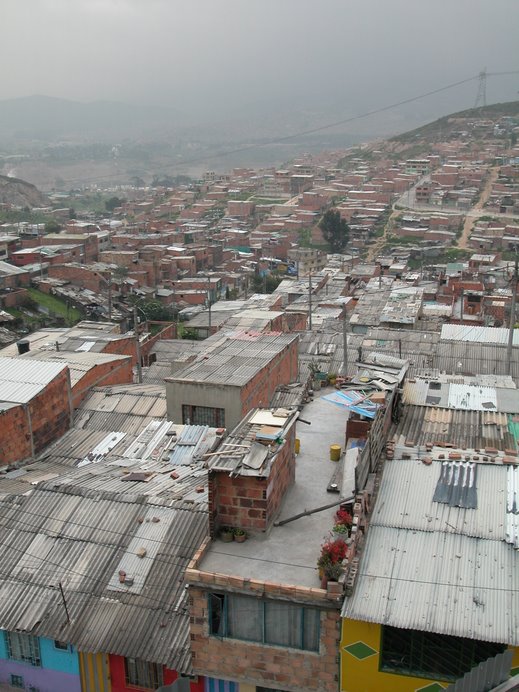
Coca farmers like these men could soon be
subject to extradition under a U.S. law.
Those are the dirt-poor peasants who plant coca leaf because they see no alternative to feed their families and may have been pushed into the business by threats from narcotraffickers. They are simple people who may have only vague understanding of what happens to the leaves after strangers buy them and haul them away.

This is thanks to the Transnational Drug Trafficking Act of 2015, now making its way thru the U.S. Congress. According to the Congressional Research Service's summary, the act 'Amends the Controlled Substances Import and Export Act to prohibit the manufacture or distribution of a controlled substance...by individuals having reasonable cause to believe that such substance or chemical will be unlawfully imported into the United States.' If the act passes passes and Colombia cooperates, then the peasant farmer who made a pittance from his coca leaves will turn on the TV in a U.S. federal penitentiary and watch the guerrilla leader who earned millions exporting those leaves making a speech in the Colombian Congress.

According to El Tiempo, only a few dozen campesino farmers are imprisoned in Colombia for the single crime of growing coca leaves. However, some 60,000 Colombian campesino families make their living by growing coca leaf, earning little more than a $1,000 per year per household. All of them - or at least the heads of household - would be subject to extradition and traial and imprisonment in the U.S. The would require lots of new U.S. federal prisons.

It hardly seems likely that entombing a few Colombian peasants in a U.S. prison would have any impact on drug production. After all, there are innumerable other hungry and fearful farmers waiting to take their places. And doesn't the U.S. have any better uses for its tax dollars than to fly peasants north, put them on trial and imprison them for decades - such as, perhaps, treating addicts in the U.S.?

Meanwhile, Colombia itself seems to be heading in the opposite direction: decriminalizing coca farming, in favor of encouraging peasants to shift to legal crops.

By Mike Ceaser, of Bogotá Bike Tours

Saturday, December 13, 2014

Relax Americans: You're Safe

James Watson,
murdered DEA agent.
Members of the taxi-driver gang which murdered a U.S. DEA agent in north Bogotá in June of last year during a mugging-gone-awry are being sentenced in a court in Virginia, and you can be certain that these guys regret their crime.

"If I could go back in time, I would," taxi driver Andrés Álvaro Oviedo, who was sentenced to 20 years in prison, was quoted in El Tiempo. "I made a mistake and know I'm going to pay for it. I never wanted to hurt anybody."

(The five men were extradited to the U.S. on the shaky justification that the smart phone which they stole contained classified DEA information - even tho the gang sold the phone without bothering to check its data.)

Whether someone who 'never wanted to hurt anybody' had any business joining a band of muggers is more than debatable. But so is Oviedo's sentence: 20 years in prison - even tho he didn't actually participate in the crime, because his taxi broke down on his way to the scene. Colombian paramilitary leaders, some guilty of hundreds or thousands of murders as well as other crimes, are getting out of prison this year after doing just 8-year terms.

Two of Oviedo's associates in the robbery-murder received prison sentences of 25 and 27 years, while the principal actors in the crime are expected to receive terms of 40 and 60 years.

These guys may very well deserve to spend the rest of their lives in prison for a crime which the judge called "grave and brutal." That's particularly true since they undoubtedly had committed previous robberies and perhaps even murders which went unpunished (and perhaps the fact that those victims were Colombians had something to do with that).

The harsh sentences may be intended to "send a message to the world that whoever attacks a U.S. citizen will pay a high price," wrote El Tiempo.

If that was the goal, they picked an effective way to accomplish it. As a result, we U.S. expatriates can relax. Any mugger who suspects a potential victim may be a gringo will surely turn around and assault someone else.

But if the goal of the justice system, either in the U.S, or Colombia, is to deter potential future
Ernesto Manzanera killed five in a car crash
and fled the scene, but is at home resting.
criminals, then perhaps they should apply similar harsh punishments to other killers, such as Avianca co-pilot Ernesto Manzanera, who while driving at 180 kilometers per hour in the early morning smashed into another car and killed its four occupants. A judge gave Manzanera home detention, and so he's resting comfortably awaiting his court date. Manzanera could be subject to 18 years in prison, but if his case follows the pattern of previous drunk driver killers, he'll receive a few years of home confinement of dubious enforcement.

One might argue that, in contrast to the cabbie gang, Manzanera did not intend to kill. But his extreme recklessness and irresponsibility come close to the same level of moral culpability. And after the accident Manzanera fled the scene and turned himself into police only 15 hours later, when any evidence of alcohol or drugs would have been flushed from his system. When Manzanera fled, at least one of his victims was still alive, compounding Manzanera's responsibility for her death.

That not all crimes or criminals are punished equally is a cliché. But occasions like this offer the opportunity to examine why that is and how the system of 'justice' could actually be true to its name.

By Mike Ceaser, of Bogotá Bike Tours

Friday, May 11, 2012

Undressing to Expose the Prisons' Problems

Walking naked down Ave. Septima to uncover the state of the prisons.
Wives of prison inmates undressed and paraded down Ave. Septima today protesting several things, principally overcrowding and poor conditions in Colombia's prisons.

'No to conspiracy as a justification for extradition.'
While major tragedies haven't taken place here recently, overcrowding has contributed to  the deaths of hundreds of prisoners in a honduras prison, and violent prison riots in Venezuela. And it's probably only a matter of time before a Colombian prison explodes: Medellin's Bellavista prison was built for 2,200 inmates but holds more than 7,000.

And the situation is only getting worse, as the prison population expands at a rate of over 14% annually. In January of 2011, the director of the Colombian prison system said, 2,740 people were imprisoned and only 700 released.

Colombia is building more prisons - at a huge cost in money which could otherwise build schools, homes and hospitals. Worse, locking up a huge number of young people ruins lives and costs the country workers, artists, even potential scientists.

Colombia should consider alternative punishments like social work for non-violent crimes and programs to prevent youths from committing crimes in the first place. I've read about a novel program in Chicago, Illinois which employs ex-gang members who defuse gang conflicts before they turn violent.

And, of course, reforming drug laws could drastically reduce the prison population. Several bills in Colombia's Congress, including one to decriminalize the growing of drug crops, would move the country in that direction - if they're approved.

'Colombia is the only nation which
extradites its children.'
The protesters also criticized the practice of extraditing Colombian criminals to be tried and punished in foreign courts, usually in the United States, and usually for narcotrafficking. Extradition has always  generated opposition on  nationalistic grounds - it's more than a bit humiliating not to be able to try and punish Colombians at home for crimes committed here.

But, there are also human rights and justice issues. Recently, some Colombian narcos have gotten light sentences in the U.S. by spilling the beans on other narcotraffickers. Some have gotten such light sentences that the joke goes that, in Pablo Escobar's time, narcos preferred a tomb in Colombia to a prison cell in the U.S., but today they race to be extradited and receive a light sentence.

 More seriously, many narcotraffickers have also committed grave human rights violations, including mass murders and displacing civilians from their homes and land. But, since U.S. courts care only about international drug trafficking, they face no punishment there for these crimes. In theory, the extradited criminals should be punished for such crimes on their return to Colombia, but this evidently does not always happen. In some cases, Colombian criminals are reportedly living peacefully in the U.S. under new identities. Others are returned to Colombia without Colombian officials even being alerted to their arrival.

By Mike Ceaser, of Bogotá Bike Tours
Thursday, September 29, 2011

How to Leave Your Crimes Behind

Back in the Pablo Escobar era, a Colombia narco's worst nightmare was being extradited to the United States, where prisons were less corrupt and he had to endure cold winters far from family.

That was one of the reasons why Escobar assassinated politicians and helped finance the M-19's attack on the Justice Palace in 1985. In the end, Escobar served time in a luxury 'prison' on a Medellin mountaintop, which he left whenever he wanted.

Some of today's Colombian criminals, however, might make a different choice.

Over recent years, Colombia has extradited a lot of paramilitary leaders to do time in the United States on narcotrafficking charges. That policy itself is burdened with injustices, since the paramilitaries' don't face justice for their most heinous crimes, such as massacre and torture, until later - if ever.

Now it looks like 'never' may be the more appropriate word.

Today's El Tiempo reports that in 'dozens of cases' paramilitaries have served time in U.S. prisons for drug trafficking charges and returned to Colombia, where authorities haven't picked them up on their much more serious human rights crimes. Examples include a man named Jairo Antonio Massu, who allegedly engineered the massacre of eight people, including two U.S. anti-drug agents.

The lack of punishment demonstrates a huge bungling on the part of U.S. law enforcement, as well as their seeming obsession with narcotrafficking crimes and nothing else.

Meanwhile, Colombians may discover that some of these men have returned to crime after returning home. If so, they may regret not having imprisoned them at home, even in a gilded cage.

As for the drug-obsessed American justice system, it may actually be doing these paramilitaries a favor, by punishing them only for their drug crimes, while their murders get forgotten.

The lesson here? If you're gonna commit mass murder and don't want to pay for it, then be sure to traffic drugs as well.

By Mike Ceaser, of Bogotá Bike Tours

Friday, April 1, 2011

Where will Walid go?

Which way to go?
Walid 'The Turk' Makled, an alleged big-time narcotrafficker from Venezuela is now cooling his heals in a Colombian prison wondering whether he should tell his tailor to make him sweaters or bermuda shorts.

That's because it's clear that Makled will be extradited - but not whether he'll go to the U.S., which wants to try him for narcotrafficking and pump him for information about Venezuelan corruption and possible government links to terrorism, or home to Venezuela, where he'll likely recant and get a slap on the wrist.

Makled was a hugely succesfull businessman back home, where he controlled, among lots of other things, Venezuelan ports and an airline. But Makled made a fateful visit to Cucuta, Colombia, and got arrested.

Chavez: "He's no friend of mine."
For reasons which I don't understand, Makled has been singing loudly in interviews like this one and this one about alleged widespread corruption in Venezuela. Maybe he likes the attention, or maybe he's shooting for a new life in the U.S.'s Federal Witness Protection Program.

With Colombian-Venezuelan relations warming, Colombian Pres. Santos has promised to send Makled back home. But perhaps today's scheduled meeting in Cartagena between Santos and Ven. Pres. Chavez was postponed because Santos wasn't ready to deliver Makled on a platter.

Venezuela has lots of chips to offer for Makled, including payment of debts to Colombia and the extradition of Colombian criminals who now live tranquilly in Venezuela. The U.S. has the free trade agreement, which Obama can't deliver.

Form letter from Chavez's
office to Makled, thanking
him for contributing to
social justice. 
If Makled is sent home, he'll either spent some very unpleasant time in solitary for his comments, or quickly announce that they were all lies made under threat of waterboarding and get home detention is his beach house. If he goes to the U.S., U.S. authorities will use his declarations to place drug charges on more Venezuelan authorities. Venezuela will deny the charges and continue happily selling oil to el imperio, which will continue unhappily buying it.

I'm not sure why Washington is fighting so hard for this guy.

By Mike Ceaser, of Bogotá Bike Tours

Thursday, November 18, 2010

Which way to Caracas?

My, how some things change. Colombia has likely extradited more of its citizens to the US for trial on narcotrafficking than has any other country in the world. And Colombia rarely let the fact that many of those men had committed much more henious crimes against humanity in their own country, against their own people, to stand in the way of using them as chips to maintain good relations with the country which financed its war effort, as well as to maintain good standing in the War on Drugs, (despite overwhelming evidence of the futility of it all).

Then, a few months ago, Colombia's new Pres. Juan Manuel Santos and Venezuela's perpetual Pres. Hugo Chavez kissed, made up and declared themselves best friends. Mr. Chavez had evidently forgotten that so recently he had called Colombia's leaders fascists, suspended trade and sent troops to the border. For his part, Mr. Santos had apparently forgotten the overwhelming evidence that Venezuela has supported the guerrillas who are trying to overthrow Colombia's democratic government.

Political opportunism has never been so much fun to watch.

The startling result of all of this? Walid Makled, Venezuelan narcotrafficking king in a Colombian prison requested in extradition by the United States is apparently about to be extradited...to Venezuela.

Both nations want to get their hands on Makled for much more than his alleged drug offenses. Makled claims to have the scoop on Venezuelan government officials' colllusion with the cocaine trade. That's why U.S. officials want to interrogate him and Venezuelan officials want him quiet and filed away somewhere, perhaps then to be shipped back home to his native Middle East, where there'll be no risk of him spilling any beans.

The practical implications of all this are zero. For a long time it's been apparent that Venezuela is really corrupt and that some high officials likely collaborate with narcotraffickers. Makled's testimony would only permit more U.S. Republicans to rant against Chavez, just as they've been doing for years anyway, to reenergize those Cuban emigre voters who've become resigned to the Castros' staying in power until God makes his final call and display dangerous signals of paying attention to other issues, like health care and the economy.

U.S. courts might even indict more Venezuela government officials of narcotrafficking and other charges.

But they won't do what would really count - stop financing Mr. Chavez by boycotting Venezuelan oil. And Chavez will never shut the oil tap and quit filling the gas tank of that northern demonic empire. For his own part, Santos will regret having friended Chavez the next time that Chavez finds it useful to stir up nationalism by denouncing the empire's puppet next door. When that happens, I'm afraid Colombia won't find much gratitude for Makled's gift wrapping and deliver.

By Mike Ceaser, of Bogotá Bike Tours

Monday, November 1, 2010

Is This Justice?

Paras arrested and perhaps on their way to the States for trial for drug trafficking. But doesn't anybody remember their murders back home?
Colombia has extradited more of its citizens to face trial in the United States for drug trafficking than has just about any other country. Those extraditees have included leaders of the FARC guerrillas and paramilitary groups, as well as straight-out narcotraffickers.

Few of those people have returned to walk Colombian soil again. An exception is Julio César Parga Rivas, a military official arrested in 2008 for allegedly working with paramilitary organizations, who, among other things, exported cocaine.

But U.S. prosecutors didn't succeed in convicting Rivas for drug trafficking, which could have meant a 30-year term in a U.S. prison. That makes sense for those who believe that buying and selling certain hallucinogenic substances should be a crime.

Except for this detail....

Rivas is also wanted in Colombia for some 70 murders, including the recruitment of young men who were then murdered and presented as guerrillas killed in battle. That was part of the notorious 'False positives' scandal, in which more than a thousand people were murdered by the military and then reported as guerrillas killed in battle.

The failure in logic and justice here is glaring: a man who allegedly has has the blood of dozens on his hands is to be tried first for trafficking substances that people want to buy? How about all of those guys doing time for drug trafficking in U.S. prisons, whose murders remain unpunished?

By Mike Ceaser, of Bogota Bike Tours