Showing posts with label medellin cartel. Show all posts

Sunday, September 6, 2015

Carlos Lehder in his Labyrinth

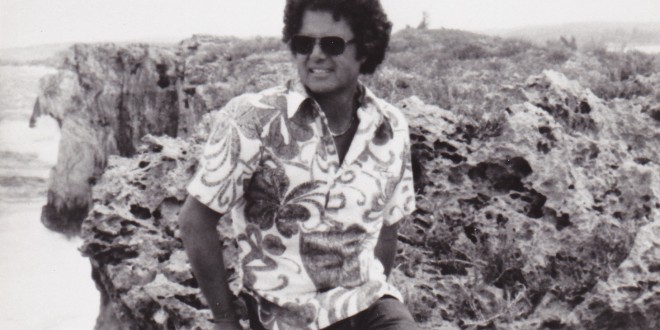
Carlos Lehder in happier times.
If Pablo Escobar became Colombia's iconic narco, Carlos Lehder may be its most pathetic and outlandish one.

And perhaps one of its least fortunate.

Lehder, 66, who's back in the news these days thanks to his pleas for release from a U.S. prison, was born in 1949 in rural Armenia, the son of a German immigrant father and a Colombian mother. His parents separated, and as a teenager Lehder and his mother moved to New York, where he became something of a hippie - but a hippie obsessed with both John Lennon and Adolf Hitler.

Lehder started out as a small-time car thief and cocaine smuggler. During a prison stint in
Lehder showing off 'product,' and Norman's Cay,
Bahamas: a landing strip with an island attached.
Connecticut, he found himself sharing a cell with a hippie pot smuggler named George Jung, later the subject of the movie 'Blow.' Jung had flown planes packed with pot from Mexico to the U.S. The two men shared their smuggling experiences, Jung would later recall, and the ambitious Lehder used prison as a school, interviewing other inmates on the details of drug smuggling. He left with a plan to fly planeloads of cocaine from his native Colombia to the States.

Previously, cocaine had been smuggled north in travelers' intestines and in luggage with false bottoms. Lehder's scheme quickly became so successful that he purchased an island in the Bahamas, drove out its residents and used it to party and as a waystation for drug shipments to the U.S. He also built a resort in Armenia and across the street put up a 10-foot-tall bronze statue of John Lennon, which eventually was stolen (and likely sold for scrap metal).

Lehder's resort and billions of dollars helped him to create his own neo-fascist political party, perhaps modeled after the Nazis, called the Latino Civic Movement.

Lehder and his Lennon statue.
Drug trafficking made Lehder multi-billionare and a founding member of the Medellin Cartel, but he developed a drug problem of his own. Pablo Escobar famously smoked marijuana, but Lehder's crack and cocaine habit and unpredictable behavior made him a problem for the other traffickers. In 1987, with anti-drug agents hot on his trail, Escobar supposedly betrayed Lehder to U.S. authorities. (According to another version, neighbors complained about a loud rowdy party. Police arrived and to their surprise discovered Lehder.)

Extradited to the U.S., Lehder received a sentence of life plus 135 additional years.

But the imprisoned Lehder had something to bargain with. He had trafficked drugs thru Panama, and so when U.S. authorities arrested Panamanian dictator Manuel Noriega, Lehder was ready to trade his knowledge for a reduction in his own sentence. Lehder's testimony reduced his sentence to 55 years.

However, Lehder claims, with some evidence, that U.S. authorities promised he would receive a sentence of no more than 30 years, and less than whatever Noriega got. Noriega was sentenced to 40 years in U.S. prison, served 16 and then was extradited to France and later to Panama, to face more charges. U.S. officials claim they made no such deal with Lehder.

So, today, Lehder, 66, is living out his life in a Florida prison, while other narcos such as two of the Ochoa brothers, fellow leaders of the Medellin cartel, are back home in Colombia after having served only about 5 years in prison. Pablo Escobar's brother Roberto now smiles for tourists in Medellin. And, some leaders of paramilitary groups, who were responsible for thousands of killings as well as narcotrafficking, are going free after 8-year prison terms.

In a letter last month to Pres. Santos, Lehder asked for the president's intervention with U.S. officials to enable Lehder to come home "to die in Colombia."

Timothy Tyler: doing life
for 13 sheets of LSD.
But the ever egoistic Lehder may have hurt his own case by boasting that he was "part of a group of visionary Medelling smugglers," who accomplished what alquemists always failed at: "turning a kilo of refined leaves into a kilo of gold."

Santos, an ex-minister of defense, may not have appreciated that boast. He has not intervened in the case.

Lehder's sentence may seem harsh. However, it is not when compared to the fates of some U.S. Timothy Tyler, a native of Florida and Connecticut already on probation, was sentenced to life in prison for mailing 13 sheets of LSD to a friend.
citizens convicted of multiple minor crimes, including drug dealing, because of insane three-strikes laws. Lehder sent tons of cocaine north ot the U.S. and undoubtedly caused many killings. But in 1992 24-year-old

By Mike Ceaser, of Bogotá Bike Tours

Friday, October 31, 2014

How Colombian History Changed in Connecticut

George Jung, cheery smuggler.
(Photo: GeorgeJung.org)
Forty years ago this year, a California hippy and a Colombian-American from Armenia found themselves sharing a prison cell in Danbury, Connecticut, USA. Their chance meeting in 1974 would change Colombian history and make Pablo Escobar possible.

They made an odd couple - one was a hippie, the other an admirer of Adolf Hitler and megalomaniac. But what they had in common overcame their differences: a taste for illegal drugs, a German heritage, a disrespect for the law, and, most of all, an ambition to make a whole lot of money very fast.

George Jung, born in 1942 in Boston, had built himself a
Carlos Lehder arrested in Florida.
business flying planeloads of Mexican marijuana into California, when a customer ratted on him to the police. Carlos Lehder, born in Armenia, Colombia in 1949, was doing a four-year prison term after getting caught in Miami with 200 pounds of marijuana.

In their shared prison cell, Jung described to Lehder his system for flying planeloads of Mexican pot
across the border into California, from where the weed was distributed nation-wide. Lehder told Jung how inexpensive cocaine was back in Colombia.

The men's eyes lit up with the potential profits, and they turned the Danbury Correctional Center into a school for drug smuggling studies. Lehder proceeded to interview other inmates for information about narcotrafficking. He even interviewed an imprisoned banker about money laundering methods.

After their release, the two teamed up to fly planeloads of Colombian cocaine into the U.S. Until then, coke had been smuggled north ounces at a time in toothpaste tubes, in false bottoms of suitcases, and in people' stomachs. Jung and Lehder inaugurated an era in which planes carrying hundreds of kilograms of drugs landed on secret airstrips in Florida and Lousiiana or tossed their bundles into the Caribbean to be scooped up by speedboats and run into Florida inlets.

Worse for wear: George Jung
more recently.
For several years, Lehder even owned a small island in the Bahamas, where he partied and stockpiled
cocaine shipments. With his millions, Lehder not only created a right-wing political party in Colombia, but also built a giant nude statue of another one of his idols - assassinated Beatle John Lennon. Meanwhile, however, Lehder antagonized other drug kingpins with his instability and own chronic drug abuse.

For his part, Jung also worked with other drug cartel leaders, including Pablo Escobar. Once, while they were talking at Escobar's hacienda, a plane landed and two of Escobar's goons pulled out a struggling man. Escobar excused himself, walked over and shot the man, and returned and resumed the conversation. Jung's life hit the big screen in the movie 'Blow' starring Johnny Depp.

Johnny Depp, left, plays Jung in the movie 'Blow.'
He's counting money with Carlos Lehder. (Foto: Flickr)
One of Jung's unrepentant web pages paints a cheery portrait of him, and recalls that during his career he sometimes earned $15 million per plane flight. On another website, he markets a line of clothing named Smuggler Ware.

The avalanche of cocaine produced lots of thrills, kept bankers working and partying all night and ruined countless lives, especially in poor neighborhoods in cities like New York and Los Angeles.

The Jung-Lehder innovation created Pablo Escobar, the Ochoa brothers, the Cali and Medellin cartels and a whole generation of violence, which still marks Colombia today.

It also produced characters like Barry Seal, as well as conspiracy theories - containing an element of truth - about U.S. government involvement in cocaine smuggling.

Jung and Lehder later separated. Both were arrested and ended up in U.S. prisons. Jung was released this year and at last report was living in a California halfway house. Lehder is still in prison in Florida, hoping to spend his final years in Colombia or Germany.

If these two men had not found themselves in the same prison cell in 1974, would Colombian - and world - history have been different? Not by much, I think. Perhaps the cocaine avalanche would have come a few years later, in less volume. But someone else would have realized that drugs were much more efficiently smuggled by the planeload than the stomach load and Colombian-American huistory would have followed the same lines.

By Mike Ceaser, of Bogotá Bike Tours