Showing posts with label narcotrafficking. Show all posts

Tuesday, April 10, 2018

The Stupidest Crime?

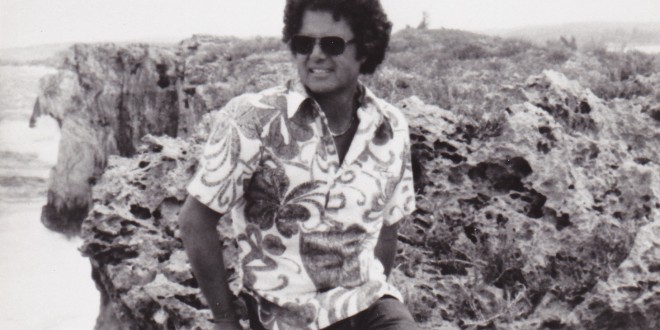
Jesus Santrich, ex-guerrilla leader and alleged narcotrafficker,
back when he was super cool.
For most Colombians, serving in Congress would be a dream job: Get paid millions to sit around talking, a free security detail and other benefits - and often you don't even need to show up for work. And there's also the widely-believed potential for corrupt side benefits from selling political influence.

But all that was not enough for Jesús Santrich, a leader of the FARC guerrillas who until a few days ago was set to assume one of the guerrilla group-turned-political-party's 10 guaranteed seats in Congress. Like the other ex-guerrilla leaders, Santrich didn't even have to campaign for his seat, which was guaranteed in the peace agreement. (And he wouldn't have gotten it democratically, since the FARC's vote was disappointingly tiny.)

According to Colombian police and the U.S.'s DEA, while getting ready to serve in Congress, Santrich was also scheming to traffic tons of cocaine to the United States. The FARC guerrillas were notorious for participating in the cocaine trade, but under the peace treaty the guerrillas signed with the Colombian government, narcotrafficking was considered a political crime eligible for amnesty. But, according to the allegations, Santrich continued trafficking after the deal was signed, which would be a crime.

Ironically, the alleged narcotrafficking attempt would be a trivial crime compared with the many
A sensationalist newspaper gloats over Santrich's arrest.
outrages the FARC guerrillas committed while Santrich was in charge of part of their radio propaganda. Those included massacres, recruitment of child soldiers, forced displacement of peasants, violence against girls and women, kidnapping and on and on and on. But those crimes are generally being 'punished' with a slap on the wrist.

The FARC have charged that Santrich is being framed. But U.S. and Colombian authorities say that their evidence, including recorded phone conversations, is strong. And it seems very unlikely that the Santos government, which has made peace with the FARC the center of its administration, would want to endanger that agreement.

If, as seems likely, Santrich is extradited to the U.S. for trial and imprisonment, his story will stand out for one thing: immense stupidity.

The case is reminiscent of the story of cartel leader Pablo Escobar's son Juan Pablo, who moved to Buenos Aires and became a successful architect, but allegedly continued using his old narco connections to help Colombian traffickers make deals with Argentine businessmen. Go figger.

By Mike Ceaser, of Bogotá Bike Tours

Sunday, September 24, 2017

The Fiscalía's New Museum

Inside Bogotá's newest museum - the Fiscalia's.
Add to Bogotá's memorable museums its newest one: The Fiscalía's.
Carlos Lehder.

Yep, seriously. The Fiscalia, or Attorney General, the agency charged with accusing and prosecuting criminals, has played a key role in the biggest dramas in Colombia's recent decades, many of which are on display in the new museum. Most impressively, the museum also includes the government's own sins.

The museum is also unintentionally a testament to the violence, corruption and general mayhem which drug prohibitionism has inflicted on Colombia. Not surprisingly, one subject the museum does not touch is decriminalization - despite its demonstrated success - because it would take away the Fiscalia's business.

Everybody's heard of Pablo Escobar, but many fewer know the name Carlos Lehder - even tho he was crazier and perhaps even richer than Escobar. Lehder admired both John Lennon and Adolf Hitler. He tried starting his own populist political party. And he even bought a Caribbean island, kicked off the inhabitants and used it to party and stockpile cocaine. But he was so unstable that Escobar supposedly betrayed him to the DEA. Lehder is still rotting away in a U.S. federal prison.

Model of an early drug-smuggling sub.
Supposedly, Escobar bought a used Soviet submarine to smuggle cocaine north, but never actually used it. Today, drug cartels build home-made diesel submarines and even aquatic drones, load them with cocaine and send the drug north.
Martyred Justice Minister
Rodrigo Lara Bonillo.

Another less-remembered character of the era was the crusading Minister of Justice Rodrigo Lara Bonillo, who prosecuted members of the Medellin cartel and was gunned down for it in Bogotá in 1984. His killing triggered the war between the government and Esocbar.

In the end, the leaders of the less-famous Cali cartel were captured and extradited to U.S. prisons, where some still remain. In contrast, many Medellin cartel leaders gave themselves up and received short sentences in Colombia - despite being much more murderous.

A jet ski which supposedly
belonged to Pablo Escobar.
Both the Medellin and Cali cartels were destroyed during the 1990s, and the paramilitaries and most guerrillas have also since disbanded. Yet, today Colombia probably exports record amounts of cocaine.

Bloque de Busqueda members looking at Esocbar's corpse
on a Medellin rooftop in 1993.
However, foreigners, particularly those recently arrived in Colombia, may not recognize other episodes - such as the Proceso 8000.

In the Proceso 8000, Liberal Party Pres. Ernesto Samper's (1994-98) presidential campaign was discovered to have received money from the Cali cocaine cartel.

The investigation brought the conviction of other government officials, but Samper himself was found 'neither guilty nor innocent' by a Congress - altho today few doubt he knew about the dirty money. It led to Washington canceling Samper's U.S. Visa - a huge embarrasment for a close ally - and the U.S. The episode was named after a folder containing key documents - altho I did not see that folder in the museum.

Cali cartel leaders on their
way to prison in the U.S.
One might trace Colombia's rejection of its traditional political parties and the eventual election of Pres. Uribe partially to the Proceso 8000 scandal. After Samper, came Pastrana's failed negotiation with the FARC, and then Uribe's U.S.-backed military offensive against the FARC, which many believe forced them to the bargaining table - albeit at a huge cost in human rights. The hard-right Uribe did not come from either of the two traditional political parties.

Display about the FARC guerrillas.
After the end of the Cali and Medellin cartels, the violence and narcotrafficking didn't let up. Colombia still had to deal with the socialist FARC and ELN guerrillas, which were born in the 1960s, and their right-wing paramilitary enemies.

A captured FARC document listing weapons,
including gun cartridges and explosives.
The government didn't defeat any of these groups. The paramilitaries demobilized during the mid-2000s, receiving up to 8-year terms, despite horrific crimes. The government also negotiated a controversial demobilization deal with the FARC and is now talking to the ELN.

FARC propaganda.
A laptop belonging to FARC leader 'Mono Jojoy' recovered
after he was killed in a government bombardment in 2010.


Probably the darkest chapter in recent Colombia history was paramilitarism - the right-wing death squads organized by landowners with government and military collaboration, which carried out many massacres, often of campesinos, including women and children, based only on suspicion of sympathy for the guerrillas.

The jeep driven by police investigating crimes in
1989 in Santander Department. 
One of the more notorious of the massacres carried out by paramilitaries with collaboration from the regular military was that of La Riochela, in 1989 in Santander Department. Fifteen judicial investigators had traveled to a remote area to investigate killings. Paramilitary fighters stopped them and cold bloodedly murdered twelve of them under orders from a Medellin cartel leader and with support from the regular military. After the killings, the 'paras' hid their weapons in a military base.


Victims of the La Rochela massacre.

Yet another dark chapter involving the regular military were the 'false positives' killings during the
Uribe government. At that time, the military gave military units rewards of bonuses and time off for killing guerrillas. Some units responded by kidnapping poor young men, killing them and disguising them as guerrillas in order to collect the rewards. The killings received national attention when a group of young men were kidnapped from Soacha, in south Bogotá, and later found dead near the Venezuelan border, labeled as guerrillas.

An exhumation kit for buried corpses.

Running thru the museum's displays, of course, is the subject of drug trafficking, which has helped finance nearly all of Colombia's violent groups (and some non-violent ones).

A cocaine.making lab. Lots of chemicals involved. Cocaine is niether green nor organic.
And cocaine can and has been smuggled inside nearly everything.
Coffee beans with cocaine inside.

'Candies' used for smuggling cocaine.

Colombian clock used for smuggling cocaine.

Pool balls, used for smuggling cocaine.

A car tire used for smuggling cocaine.
Unsurprisingly, the museum does not touch the subject of decriminilizing drugs, a policy which has produced lots of benefits when tried in Portugal. That doesn't surprise, because such a policy would reduce the Fiscalia's business.

The Museo de la Fiscalia is located in this building on Carrera 13 just south of Calle 19, in central Bogotá.
You can leave your bike in the parking lot across the street. Admission is free. 

By Mike Ceaser, of Bogotá Bike Tours

Tuesday, September 12, 2017

'Francis in the Land of the Narcos'

'Francis in the Fatherland of the Narcos,' in Spain's
El Mundo newspaper was not appreciated in Colombia.
,No nation likes to be labeled a 'narco state' - even when there's an element of truth in it. So, when Spain's El Mundo newspaper ran a story about the Pope's visit entitled 'Francisco in the Fatherland of the Narcos,' it generated lots of anger here.

Of course, if any nation ever was a narcoland, it was Colombia back in the '80s and '90s, when Escobar, his associates and his rivals in Cali kidnapped and assasinated politicians almost at will and even threatened to destroy the state. Today, despite record levels of cocaine production, Colombia has left the narcos era behind.

But, altho Colombia doesn't appreciate being reminded of Escobar & Co., some Colombians don't mind making money off of that legacy.

This Medellin tour promises that it's the real, original Escobar tour - and promises to contribute part of its income (but not how much) to social causes. This tour has 'EVERYTHING IN EXTREMES: POWER, MONEY, BETRAYAL, DRUGS, WOMEN, CRIMES, ARRESTS, ESCAPES, HIS OWN ZOO AND ALSO HIS OBSCURE DEATH.' the website points out, before veering away from the drama and violence to point out that many Colombians were impacted by the drug trade, and boasting that theirs is 'The tour accepted and recognized by local people.'


The scale of the tragedy from the narcos era would be hard to overestimate. Some say that Escobar killed 50,000 people, thru bombings, assassinations and general mayhem. Adding to that the other cartels and the general atmosphere of violence produced a homicide rate hundreds of times higher than that of a 'normal' European nation.

Here in Bogotá, the Colombian mafia tour makes no bones about what it's about:


While the 'Heroes tour', subtitled 'Colombia vs. Pablo Escobar', seems to aim to ignore Escobar by focusing on him.


Colombian television has never shied away from making miniseries about drugs, cartels, guerrillas and paramilitaries. However, there seems to be a bit of resentment against Netflix, which is making the real money with its Narcos series.

A Bogotá billboard advertising Netflix' Narcos series points out that the Medellin cartel emphasized violence, and the Cali cartel corruption.
As for the El Mundo article, it was actually a thoughtful piece about Medellin's renaissance and the city's role in Catholic Church history, particularly in the development of Liberation Theology. And the newspaper's editor admitted that the headline was designed to attract clicks. Such is the desperate nature of today's newspaper business.

By Mike Ceaser, of Bogotá Bike Tours

Saturday, October 3, 2015

Megateo's Lesson

Megateo and an EPL banner.
Megateo, the criminal gang leader reported killed yesterday, along with five bodyguards, by Colombian military, was no run-of-the-mill criminal.

Megateo, 39, whose real name is Víctor Ramón Navarro, is a holdout - or holdover - from a little-remembered guerrilla group called the EPL, or Popular Liberation Army, which officially demobilized in 1991.

The EPL, founded in 1967 by dissidents of the Colombian Communist Party, adopted an ideology inspired by Mao Tse Tung and later by the Stalinist Enver Hoxha, leader of Communist Albania. Such a closed and extremist ideology didn't seem very promising, and wasn't. The EPL never expanded much beyond its base in El Norte de Santander Department. In 1991, most of the EPL's members signed a peace accord with the government and transformed themselves into the Hope, Peace and Liberty political party, whose initials conveniently are EPL.

Following the demobilization, the EPL political party experienced a genocide which anticipated the
Megateo and troops.
better-remembered killing of the Union Patriotica political party members about the same time. But in contrast to the UP members, who were murdered by right-wing groups linked to the government, the EPL members were killed by EPL holdouts and members of the leftist ELN and FARC guerrilla groups, who considered them traitors.

That history has been conveniently forgotten by today's guerrillas, who often call themselves victims of right-wing and government violence.

In 1994, Megateo became the leader of the EPL holdouts, and transformed his band into pure criminals and narcotraffickers with ideological pretentions. A similar thing happened after the paramilitaries' own demobilization, when many incorporated into vicious, drug-trafficking criminal bands called Bacrim.

Megateo's story is a reminder that peace processes, like the one now underway with the FARC, often don't end the violence, especially when there's illegal drug money to be made.

By Mike Ceaser, of Bogotá Bike Tours

Sunday, September 6, 2015

Carlos Lehder in his Labyrinth

Carlos Lehder in happier times.
If Pablo Escobar became Colombia's iconic narco, Carlos Lehder may be its most pathetic and outlandish one.

And perhaps one of its least fortunate.

Lehder, 66, who's back in the news these days thanks to his pleas for release from a U.S. prison, was born in 1949 in rural Armenia, the son of a German immigrant father and a Colombian mother. His parents separated, and as a teenager Lehder and his mother moved to New York, where he became something of a hippie - but a hippie obsessed with both John Lennon and Adolf Hitler.

Lehder started out as a small-time car thief and cocaine smuggler. During a prison stint in
Lehder showing off 'product,' and Norman's Cay,
Bahamas: a landing strip with an island attached.
Connecticut, he found himself sharing a cell with a hippie pot smuggler named George Jung, later the subject of the movie 'Blow.' Jung had flown planes packed with pot from Mexico to the U.S. The two men shared their smuggling experiences, Jung would later recall, and the ambitious Lehder used prison as a school, interviewing other inmates on the details of drug smuggling. He left with a plan to fly planeloads of cocaine from his native Colombia to the States.

Previously, cocaine had been smuggled north in travelers' intestines and in luggage with false bottoms. Lehder's scheme quickly became so successful that he purchased an island in the Bahamas, drove out its residents and used it to party and as a waystation for drug shipments to the U.S. He also built a resort in Armenia and across the street put up a 10-foot-tall bronze statue of John Lennon, which eventually was stolen (and likely sold for scrap metal).

Lehder's resort and billions of dollars helped him to create his own neo-fascist political party, perhaps modeled after the Nazis, called the Latino Civic Movement.

Lehder and his Lennon statue.
Drug trafficking made Lehder multi-billionare and a founding member of the Medellin Cartel, but he developed a drug problem of his own. Pablo Escobar famously smoked marijuana, but Lehder's crack and cocaine habit and unpredictable behavior made him a problem for the other traffickers. In 1987, with anti-drug agents hot on his trail, Escobar supposedly betrayed Lehder to U.S. authorities. (According to another version, neighbors complained about a loud rowdy party. Police arrived and to their surprise discovered Lehder.)

Extradited to the U.S., Lehder received a sentence of life plus 135 additional years.

But the imprisoned Lehder had something to bargain with. He had trafficked drugs thru Panama, and so when U.S. authorities arrested Panamanian dictator Manuel Noriega, Lehder was ready to trade his knowledge for a reduction in his own sentence. Lehder's testimony reduced his sentence to 55 years.

However, Lehder claims, with some evidence, that U.S. authorities promised he would receive a sentence of no more than 30 years, and less than whatever Noriega got. Noriega was sentenced to 40 years in U.S. prison, served 16 and then was extradited to France and later to Panama, to face more charges. U.S. officials claim they made no such deal with Lehder.

So, today, Lehder, 66, is living out his life in a Florida prison, while other narcos such as two of the Ochoa brothers, fellow leaders of the Medellin cartel, are back home in Colombia after having served only about 5 years in prison. Pablo Escobar's brother Roberto now smiles for tourists in Medellin. And, some leaders of paramilitary groups, who were responsible for thousands of killings as well as narcotrafficking, are going free after 8-year prison terms.

In a letter last month to Pres. Santos, Lehder asked for the president's intervention with U.S. officials to enable Lehder to come home "to die in Colombia."

Timothy Tyler: doing life
for 13 sheets of LSD.
But the ever egoistic Lehder may have hurt his own case by boasting that he was "part of a group of visionary Medelling smugglers," who accomplished what alquemists always failed at: "turning a kilo of refined leaves into a kilo of gold."

Santos, an ex-minister of defense, may not have appreciated that boast. He has not intervened in the case.

Lehder's sentence may seem harsh. However, it is not when compared to the fates of some U.S. Timothy Tyler, a native of Florida and Connecticut already on probation, was sentenced to life in prison for mailing 13 sheets of LSD to a friend.
citizens convicted of multiple minor crimes, including drug dealing, because of insane three-strikes laws. Lehder sent tons of cocaine north ot the U.S. and undoubtedly caused many killings. But in 1992 24-year-old

By Mike Ceaser, of Bogotá Bike Tours

Thursday, March 26, 2015

The Female Solution?

Where are they off to? DEA agents on the move. (Image: YouTube screen grab)
United States Drug Enforcement Agency guys reportedly attended sex parties sponsored by Colombian narcotraffickers.

In early 2013, Honduras' ambassador in Bogotá resigned after revelations of sex parties with prostitutes inside the embassy.

A few years ago, US Secret Service agents started an international scandal by hiring prostitutes in Cartagena during the run-up to an international summit meeting in Cartagena.

The key factors here? Machismo and testosterone.

A New York Daily News cover about the
Cartagena Secret Service scandal.
Hiring prostitutes and attending sex parties may or may not be wrong, depending on your moral code.
But they certainly do generate scandal, and they can place agents in compromising situations and make them vulnerable to blackmail and extortion.

Fortunately, there is an easy solution to these male-generated problems: Hire only female agents and officials.

Women are of course not immune to sexual improprieties. But the endless parade of prominent men apologizing and resigning for involving their private parts with the wrong people suggests to me that there's something uniquely male behind this.

On the other hand, removing men from all responsible positions in government, business and even science might be difficult. And the U.S. government's solution: imposing a zero tolerance policy for paying for sex, might also be unrealistic, considering how ingrained the sex-and-partying culture appears to be.

Or, perhaps U.S. government bureaucrats believes they can re-engineer human nature and stop thos macho guys, far from wives and girlfriends, from noticing exotic women?

Perhaps a more realistic policy would be to accept commercial sex as a realistic part of male behavior, legalize and destigmatize it, so that it ceases to become a potential source of blackmail and extortion. That might, at the same time, also improve working conditions for the prostitutes involved as well as making it possible to ensure that those working women are not also on the tab of spies, narcos or terrorists.

And, while they're in the business of decriminalizing behavior, why not also consider decriminalizing drugs, as well. That would eliminate the whole need for those corruptible DEA agents in the first place.

By Mike Ceaser, of Bogotá Bike Tours

Saturday, November 10, 2012

The 'Mexicanization' of Colombia?

A lot has been written during recent years about the supposed 'Colomobianization of Mexico,' by which observers mean the shifting of Colombia's violence north to Mexico and Central America. There is something to that: While violence has declined here, it's soared to the north, as Mexican cartels battle each other over the drug sales routes which they've wrested from Colombian cartels. But nevertheless, Mexico's violence has been different: Unlike Colombia's left-wing guerrillas and right-wing paramilitaries, Mexico's narcos are non-political organizations out to make money.

But now, after the massacre Wednesday of 10 campesinos in the town of Santa Rosa de Osos, Antioquia, some observers are talking about the opposite: the possible Mexicanization of Colombia. It's far too early to say, and let's all pray that it doesn't happen. But with the demobilization of most of the paramilitaries and the weakening of guerrilla groups, there's the danger that plain old criminal organizations, like Colombia's bacrims, will take over the industry. It's a grim observation that, while Colombia has suffered many massacres, they have 'at least' generally had a political character and have in some way been deliberated and controlled by the conflicting groups. The fear is that the wholesale and gruesome Mexico-type massacres, whose killers seem to have no compunction or moral law except vengeance, could become more frequent here.
The nine men and one woman were killed Wednesday on a farm, targeted apparently because of whom they worked for. Authorities suspected that the killings were committed in retaliation for the arrest a week ago of criminal band leader Jorge 18. Officials blamed the murders on the Rastrojos - succesors of disbanded paramilitary groups.

President Santos vowed to capture the killers and the government offered a 150 million peso reward for information.

A more fundamental solution? Legalize the drugs these groups fight over and finance themselves with.

By Mike Ceaser, of Bogotá Bike Tours

Sunday, August 12, 2012

Rise of the Original Peoples?

Combative Nasa indigenous people. 

Back in Bolivia, where a white minority dominated politics and business, an Argentinean friend observed to me that 'the world doesn't belong to the indigenous peoples.'

That's still clearly true. From Alaska down to Tierra del Fuego, the indigenous peoples who once possessed the hemisphere are overwhelmingly impoverished, subject to violence and victims of addictions, domestic violence and other severe social problems.

An Embera woman.
(Photo: Wikipedia)
Colombia has about 1.4 million indigenous people, divided into about 100 ethnic groups, altho many more Colombians have indigenous blood, and indigenous territories cover an astounding one quarter of the country's territory. A few dozen of those indigenous people, Emberas from the Chocó region, have been living for the past several weeks in a hostel in La Candelaria around the corner from Bogotá Bike Tours. You see them carrying handicrafts for sale on the sidewalks, or riding their bikes up and down the streets. One evening, I saw four Embera children seated on all four corners of an intersection, begging for coins.

Despite all of the indigenous territory, these people have none. "You know how it is," one young man who had brought in his bike for repair told me, "there are lots of violent groups there." Perhaps he was afraid to say which of these violent groups - drug traffickers, guerrillas or paramilitaries - had driven his people off of their land, or perhaps he didn't even know. But this group of Embera are waiting and hoping that the government can find them someplace safe to live. Meanwhile, here in the city, their culture is slowly contaminated by Western values and vices, and some may become sick, addicted or decide against returning to their traditional ways.
Nasa people in a recent meeting. (Photo: Nasa website)

The situation today is very different in Cauca Department, where a group of Nasa people have expelled soldiers from a guard post and arrested FARC guerrillas and whipped them for endangering the Nasa by invading their territories.

Now, the Nasa are in discussions with Colombian authorities about the conditions under which the military can enter indigenous territories. The issue is of obvious importance for Colombia's government and military, since many of the huge indigenous territories are located in strategic border regions or in mountains where outlaw groups could find secure refuge.

Colombia's indigenous territories are in red. 
The prospect of demilitarized regions without state presence is a worrisome historical precedent for Colombia. A self-declared 'independent republic' was where the FARC guerrillas got their start in the 1950s and '60s. And El Caguan, the demilitarized zone given to the FARC from 1998 to 2002 remains a black market in Colombian history. It was supposed to be a neutral area to stage peace negotiations, but the guerrillas used it to stockpile weapons and hold kidnappees.

Work on a reservoir which Nasa
leaders say will harm their territory. 
The indigenous peoples' plight is certainly understandable, caught as they are in the middle of conflict between outsiders, which nevertheless harms their land and their people. Indigenous peoples have seen their lands planted with drug crops and their children taken away to be made into guerrilla fighters. (Indigenous young men are excluded from the country's military service requirement.) Illegal drugs flow thru indigenous lands, particularly those near the Pacific Coast, leaving trails of violence.

But the NASAs' policy of giving the military and guerrillas the same treatment - as tho both forces had equal legitimacy - is mistaken. One is a legitimate arm of the state, the same state in which the indigenous peoples participate thru Parliament (where they have representatives), local authorities, public schools, government-built roads, state assistance and in many, many other ways. The guerrillas, on the other hand, are outlaws trying to tear down that state, who have planted drug crops on indigenous lands and turned their children into fighters.

The new assertiveness of the Nasas and other indigenous peoples probably won't lift them out of poverty. But it could enable them to protect their traditions and culture from outsider, and reduce the impacts of violence on their people. However, to do that they'll have to reach an understanding with the Colombian government which protects their sovereignety while not threatening the foundation of the Colombian state.

In the end, however, the greatest threats to indigenous people's ways of life may not be guerrillas or narcotraffickers, but mining, deforestation and other threats to the ecosystems they depend on.


By Mike Ceaser, of Bogotá Bike Tours

Friday, June 15, 2012

Uribe's Relative Troubles


Alvaro Uribe may wish that
his brother had been less prolific.

As president from 2002 to 2010, Alvaro Uribe made the fight against narcotrafficking and the guerrillas who profit from it the center of his policy, and progress combatting both gave him great popularity.

And since leaving office, Uribe has used his Twitter account and public speeches to try to pressure his succesor Santos to take a similar line.

So Uribe must feel particularly dismayed by revelations that close relatives of his stand accused of drug trafficking, and may be extradited to the United States - the same place where Uribe sent so many Colombian narcos. The revelations, by journalist Gonzalo Guillén on the Nuevo Arco Iris website, could undercut Uribe's criticisms of Pres. Santos' policies, including the Framework for Peace law approved by Congress today, which Uribe calls an amnesty for guerrillas. Uribe has also harshly attacked Santos's military strategy, which Uribe charges has enabled leftist guerrillas to return to the offensive.

The Uribe-Santos split is surprising, since Santos was Uribe's defense minister and Uribe's hand-picked succesor. It's gotten so serious, with a constant stream of criticisms on Uribe's Twitter account, that Miami Herald columnist Andres Oppenheimer recently wrote that the fued "could cripple Colombia."

Uribe's political plans are unknown, but he certainly won't keep quiet. Some speculate that Uribe wants to find a way to run for president again - for which he'd likely have to get approval from the Supreme Court.

According to the latest revelations, the ex-president's brother Jaime Alberto Uribe, who died in 2001 of throat cancer, had two children outside of marriage with Dolly de Jesús Cifuentes. That's not unusual in Colombia, and wouldn't be material for scandal, but for the fact that U.S. authorities accuse Dolly de Jesús Cifuentes and her daughter of belonging to the Cifuentes Villa drug cartel, which allegedly shipped tons of cocaine to the U.S. The Cifuentes Villa organization is allegedly linked to the Mexican Sinaloa Cartel.

Guillen also reports alleged links between Uribe's brother and the Cifuentes Villa cartel, and that the Uribe administration didn't investigate the organization.

This isn't the first time ex-Pres. Uribe has been linked to outlaw organizations. A 1991 U.S. intelligence report linked Uribe to narcotrafficking. U.S. authorities later said the report was only speculation. Various Uribe relatives have also been linked to right-wing paramilitary death squads, including a cousin who did prison time for collaborating with the organizations. Uribe himself has been harried by suspicions of links to the outlaw organizations, which are classified as terrorists by the U.S. and Colombian governments and have committed some of the most horrific atrocities in Colombia's long armed conflict.

While governor of Antioquia Department from 1995 to '97, Uribe encouraged the organization of Convivir or rural self-defense organizations supposed to protect residents against guerrillas and kidnappers. But the Convivirs were accused of collaborating with the paramilitaries.

Uribe has always denied any links to the paramilitaries, and he said via twitter that he didn't even know about his brother's illegitimate children.

Despite these questions, and scandals such as the false positives killings, Uribe remains highly popular, and would stand a strong chance if able to run for another term as president.


By Mike Ceaser, of Bogotá Bike Tours

Wednesday, May 30, 2012

Pablo Escobar's Bloody Trail in Bogotá

The tomb of presidential candidate Luis Carlos Galan in Bogotá's Central Cemetery. One of Escobar's assassins shot him while campaigning in south Bogotá in 1989.
Escobar, lord of evil.
Cocaine king Pablo Escobar is back in the news, thanks to a TV miniseries about his life called 'Pablo Escobar, Lord of Evil.'

Escobar was born and lived in Medellin, where he built a narco empire and wrought havoc - altho he also made himself a folk hero by distributing jobs and money to the city's poor.

Here in Bogotá, Escobar, who had no qualms about committing mass-murder, also left a trail of tragedy and terror.

1985: The Justice Palace on Plaza Bolivar in flames. 
In 1985, the M-19 guerrillas invaded the Justice Palace on Plaza Bolivar and took the magistrates hostage. The attack and ensuing military counter-attack ended with more than 100 people dead, including 11 of the 12 justices, and the building in flames. According to lots of evidence, Escobar helped finance the attack because he shared the M-19's opposition to the practice of extraditing Colombian drug traffickers to the U.S. for trial, and in order to destroy the documentary evidence inside the Justice Palace building.

The Congress building on Plaza Bolivar,
where Escobar briefly held a seat.
Ironically, just three years before, Escobar, who had been elected an alternative congressman, had taken a seat in the Congress building on the plaza's south side. Reportedly, people rushed to get out of his way in the passageways.

In 1986, Escobar's assassins shot and killed Guillermo Cano, publisher of the El Espectador newspaper, which had bravely editorialized against the drug lords. But that wasn't enough for Escobar. Three years later, he bombed the newspaper's printing plant. El Espectador has never since recovered completely . For two decades after, it published only as a weekly.

Aftermath of the DAS bombing. 
That same year, Escobar car bombed the DAS, or secret police, headquarters in Bogotá, destroying the building and killing 60 people and injuring 600.

Just a sample of the Lord of Evil's doings in Bogotá.

Escobar finally gets his own medicine:
Dead on a Medellin rooftop.
For the record, Canal Capital is doing its own series, about Escobar's victims.


Residencias Tequendema, in Bogotá's Centro Internacional, was used by the government to hold Escobar's wife and children during the final phase of the hunt for the cartel leader in 1993. Escobar's son was here during the cellphone conversation which enabled the hit squad to locate Escobar in Medellin and shoot him down on a rooftop.


By Mike Ceaser, of Bogotá Bike Tours