Sunday, September 6, 2015

Carlos Lehder in his Labyrinth

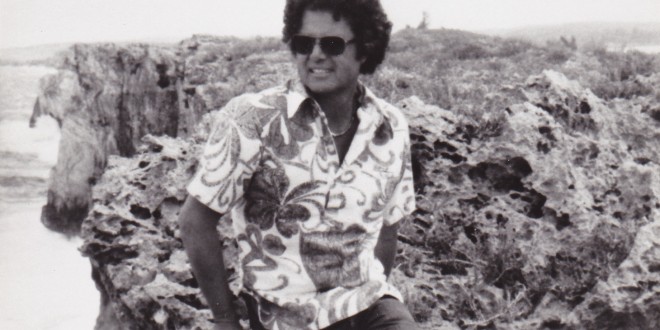
Carlos Lehder in happier times.
If Pablo Escobar became Colombia's iconic narco, Carlos Lehder may be its most pathetic and outlandish one.

And perhaps one of its least fortunate.

Lehder, 66, who's back in the news these days thanks to his pleas for release from a U.S. prison, was born in 1949 in rural Armenia, the son of a German immigrant father and a Colombian mother. His parents separated, and as a teenager Lehder and his mother moved to New York, where he became something of a hippie - but a hippie obsessed with both John Lennon and Adolf Hitler.

Lehder started out as a small-time car thief and cocaine smuggler. During a prison stint in
Lehder showing off 'product,' and Norman's Cay,
Bahamas: a landing strip with an island attached.
Connecticut, he found himself sharing a cell with a hippie pot smuggler named George Jung, later the subject of the movie 'Blow.' Jung had flown planes packed with pot from Mexico to the U.S. The two men shared their smuggling experiences, Jung would later recall, and the ambitious Lehder used prison as a school, interviewing other inmates on the details of drug smuggling. He left with a plan to fly planeloads of cocaine from his native Colombia to the States.

Previously, cocaine had been smuggled north in travelers' intestines and in luggage with false bottoms. Lehder's scheme quickly became so successful that he purchased an island in the Bahamas, drove out its residents and used it to party and as a waystation for drug shipments to the U.S. He also built a resort in Armenia and across the street put up a 10-foot-tall bronze statue of John Lennon, which eventually was stolen (and likely sold for scrap metal).

Lehder's resort and billions of dollars helped him to create his own neo-fascist political party, perhaps modeled after the Nazis, called the Latino Civic Movement.

Lehder and his Lennon statue.
Drug trafficking made Lehder multi-billionare and a founding member of the Medellin Cartel, but he developed a drug problem of his own. Pablo Escobar famously smoked marijuana, but Lehder's crack and cocaine habit and unpredictable behavior made him a problem for the other traffickers. In 1987, with anti-drug agents hot on his trail, Escobar supposedly betrayed Lehder to U.S. authorities. (According to another version, neighbors complained about a loud rowdy party. Police arrived and to their surprise discovered Lehder.)

Extradited to the U.S., Lehder received a sentence of life plus 135 additional years.

But the imprisoned Lehder had something to bargain with. He had trafficked drugs thru Panama, and so when U.S. authorities arrested Panamanian dictator Manuel Noriega, Lehder was ready to trade his knowledge for a reduction in his own sentence. Lehder's testimony reduced his sentence to 55 years.

However, Lehder claims, with some evidence, that U.S. authorities promised he would receive a sentence of no more than 30 years, and less than whatever Noriega got. Noriega was sentenced to 40 years in U.S. prison, served 16 and then was extradited to France and later to Panama, to face more charges. U.S. officials claim they made no such deal with Lehder.

So, today, Lehder, 66, is living out his life in a Florida prison, while other narcos such as two of the Ochoa brothers, fellow leaders of the Medellin cartel, are back home in Colombia after having served only about 5 years in prison. Pablo Escobar's brother Roberto now smiles for tourists in Medellin. And, some leaders of paramilitary groups, who were responsible for thousands of killings as well as narcotrafficking, are going free after 8-year prison terms.

In a letter last month to Pres. Santos, Lehder asked for the president's intervention with U.S. officials to enable Lehder to come home "to die in Colombia."

Timothy Tyler: doing life
for 13 sheets of LSD.
But the ever egoistic Lehder may have hurt his own case by boasting that he was "part of a group of visionary Medelling smugglers," who accomplished what alquemists always failed at: "turning a kilo of refined leaves into a kilo of gold."

Santos, an ex-minister of defense, may not have appreciated that boast. He has not intervened in the case.

Lehder's sentence may seem harsh. However, it is not when compared to the fates of some U.S. Timothy Tyler, a native of Florida and Connecticut already on probation, was sentenced to life in prison for mailing 13 sheets of LSD to a friend.
citizens convicted of multiple minor crimes, including drug dealing, because of insane three-strikes laws. Lehder sent tons of cocaine north ot the U.S. and undoubtedly caused many killings. But in 1992 24-year-old

By Mike Ceaser, of Bogotá Bike Tours

Tuesday, September 1, 2015

Turning the Historical Tables


Five hundred years ago, foreigners occupied the lands of Colombia's indigenous people, taking the land away to use for agriculture and mining.

Today, dozens of indigenous Colombians and campesinos occupied the Ministry of Agriculture on Jimenez Ave. in central Bogotá today, making demands which however weren't very clear to the public.

In the morning, an indigenous man whom I asked about their demands refused to tell me - which struck me as not the best way to obtain those demands.

According to El Tiempo, the protesters are demanding that the government fulfill certain agreements, basically involving money. That seemed to be the view also of the police standing by the protest.

"It's all about money," a police officer told me.

A crazy man gestures at the protesters.
But a woman protester told me that their demands also included land redistribution and an end to killings of indigenous people. Then, one of her companions called her away, apparently to stop her talking to an outsider. Then, another protester asked me to stop taking pictures "for the safety of the people," even tho I'd seen people taking their pictures all day long, and their photos are on El Tiempo's and other websites.

 This evening, the occupiers were still there - perhaps justifiably, since only a few centuries ago this was all indigenous territory.

The sign says 'We are not terrorists.'

Riot police wait across the street.
By Mike Ceaser, of Bogotá Bike Tours

Wednesday, August 26, 2015

Scapegoating Colombians

Deported Colombians wait with their belongings.
(Reuters)
"They're driving them out of their homes, and stealing their belongings," one of the guys who works with me said angrily, turning away from the TV news.

He had been watching a report about Colombians being driven out of their homes in Venezuelan border regions and deported back to Colombia.

Those Colombians are, according to the Venezuelan government, the cause of Venezuela's problems.

Venezuela has one of the world's highest homicide rates - so high that its government has stopped publishing crime statistics. Its economy is floundering so badly that the economics ministry has quit publishing inflation statistics. Its troubles with shortages and corruption go on and on.

Now, with parliamentary elections just a few months away, the Venezuelan government has decided that the culprits are not Venezuelans, but Colombians (not to mention the evil, imperialistic U.S.)

Venezuela's continuing crisis will likely only get lots worse before things get better. And, Venezuela will badly need the goodwill and assistance of its most important neighbor and important trading partner.

Venezuelan Pres. Maduro may see electoral advantages in scapegoating Colombians, but he's not doing his nation any long-term favors.

Maduro's '21st-Century Socialism', which consists mostly of populist give-aways and economic controls, is based on denial of economic realities. Price controls and a command economy caused shortages and long lines in communist Eastern Europe. Now they're bringing the same results to Venezuela. Why should anybody be surprised?

It is true that, on a small scale, Venezuela's troubles are contributed to by Colombian (and Venezuelan) smugglers, who carry subsidized Venezuelan gasoline and foodstuffs across the border and cocaine the other way.

Guess what happens when something costs pennies on one side of a line and dollars on the other? That product gets shifted from the cheap side to the rich side, no matter what anybody tries to do. It's like water flowing downhill.

Venezuela has always been unsustainably dependent on oil income. But that independence has only increased during the years since Hugo Chavez was elected president, making the recent price plunge extremely devastating. The Venezuelan government has only made the situation worse by making gasoline free, hemorraging many billions of dollars annually with a subsidy which also harms the environment and goes disproportionalely to the wealthy.

Until Venezuela discovers economic reality its troubles will worsen. Sadly, that means that persecution of Colombians may only get worse.

By Mike Ceaser, of Bogotá Bike Tours

Monday, August 24, 2015

The Importance of Barry Seal

Barry Seal
Barry Seal, the legendary drug plane pilot, is back in the news, thanks to a film about him starring Tom Cruise, who is now in Colombia.

Expect an exciting, shoot-em-up flic - which ignores Seal's real importance on the hemisphere's history.

Seal certainly did have an exciting life. According to the Spartacus website, Seal smuggled arms to Fidel Castro's Cuban rebels and later to the forces trying to overthrow Castro; Seal flew in the Vietnam war and for decades worked for the CIA. Seal eventually discovered that he could make lots more money hauling illegal substances than passengers - some perhaps for the CIA. Some even link Seal to the John F. Kennedy assassination. Seal was caught smuggling quaaludes into Florida, indicted, and agreed to cooperate with U.S. authorities. In a plane equipped with hidden cameras, he picked up a load of cocaine in the Nicaragua ruled by the leftist Sandanistas, whom the Reagan administration considered a communist threat to the hemisphere.

The photos Seal brought back showed showing Medellin cartel leaders Pablo Escobar, Jorge Luis
Medellin cartel leaders load cocaine
onto Seal's plane in Nicaragua.
Ochoa and others loading cocaine into a C-123 transport plane with the help of a Nicaraguan government official - great evidence for the Reagan administration of the Sandinistas' evil nature. Reagan released the photos to win support for the U.S.-financed Contra war against the Sandinistas.

Seal was murdered in Feb. 1986 by Medellin cartel hit men while serving probation in a Salvation Army halfway house in Baton Rouge Louisiana.

The U.S. Congress had prohibited aid to the Contras, who had committed severe human rights violations. In response, the Reagan administration cooked up the scheme known as Iran-Contra, in which the U.S. illegally funnelled money from arms sales to Iran to the Nicaraguan Contras. Many say the scheme was worse than Watergate, but Reagan's popularity and great media skills enabled him to save his presidency.

The Contra scheme was later dropped, and Sandinista leader Daniel Ortega was eventually elected president of Nicaragua, where he has shown himself to be a competent administrator but has restricted media rights and perpetuated himself in power. If Nicaraguan dictatorships of previous decades handed the nation's resources over to U.S. companies, Ortega seems to be giving them to the Chinese.

Seal may or may not have changed the America's history, but he was certainly a part of it.

By Mike Ceaser, of Bogotá Bike Tours

Friday, August 21, 2015

Painted Into a Box

Gridlocked cars block Ave. Caracas
Recently, some city transit official with great faith in human nature decided that painting the intersection of Ave. Caracas and Calle 13, which suffers chronic, daily gridlock, would make the traffic chaos magically disappear.

Of course, drivers ignore it. Look at the results.

Has anybody thot of fining drivers who stop inside intersections? Thjs practice, which seems easy enough to discourage, costs Bogotanos immeasurable frustration and countless hours of lost time.

The result.
By Mike Ceaser, of Bogotá Bike Tours

Thursday, August 20, 2015

A Naked Statement


No, these are not victims of the Ashley Madison leak, but a piece of performance art by students from the Universidad de Antioquia and the Universidad Nacional. They pulled the cart of nudes from the university's campus all the way to Plaza Bolivar today. Lucky thing the weather was warm and not raining, but hope these folks invested in sun-screen.

The perfromance, named Carga Monton Colectivo 'El Cuerpo Habla', was a protest against racism, fascism, sexual violence and all sorts of other evil things.

The bodies represent death, a student accompanying the work told me, "but we Colombians are a very lively people."


The nude performers pass a school, drawing a bit of attention.


By Mike Ceaser, of Bogotá Bike Tours

Clearing The Air?

No worries: A bus belches its way down Calle 19 today.
A group of Bogotá residents recently received a reply from the Secretaría del Ambiente to our list of questions about why they don't bother to enforce pollution laws.

Naturally, they're doing a great job. They even say so themselves. According to the Secretaría they carry out daily checks on polluting vehicles. Only trouble is, that none of us ever see them do it, and in my ten years in Bogotá I've never seen them stop a single one of those smoke belching buses in the center of Bogotá.

'The Environmental Secretariate carries out daily pollution controls.' But apparently they do it in secret.
A cyclist campaigning for the Green Party wears an anti-pollution mask.
This smoking truck somehow escaped the controls.

The Secretaría does measure air pollution, altho I suspect that their devices are high up, where the air's cleaner and far from where people actually breathe. But even according to their doubtful data, the city's average air pollution is in the 'moderate' range. That means that in highly polluted corridors like busy avenues, where many people spend a lot of their time, the pollution's terrible. And, according to the Secretaría's own data, the concentration of the tiniest, most dangerous. particles, is getting worse.
Air pollutiong getting worse.
But the Secretaría doesn't seem to think that they could do anything better - for example by citing those chimeneas rodantes which we all see every single day, but which the Secretaría apparently does not.

By Mike Ceaser, of Bogotá Bike Tours