Showing posts with label el bogotazo. Show all posts

Thursday, June 1, 2017

Memories of El Tranvia

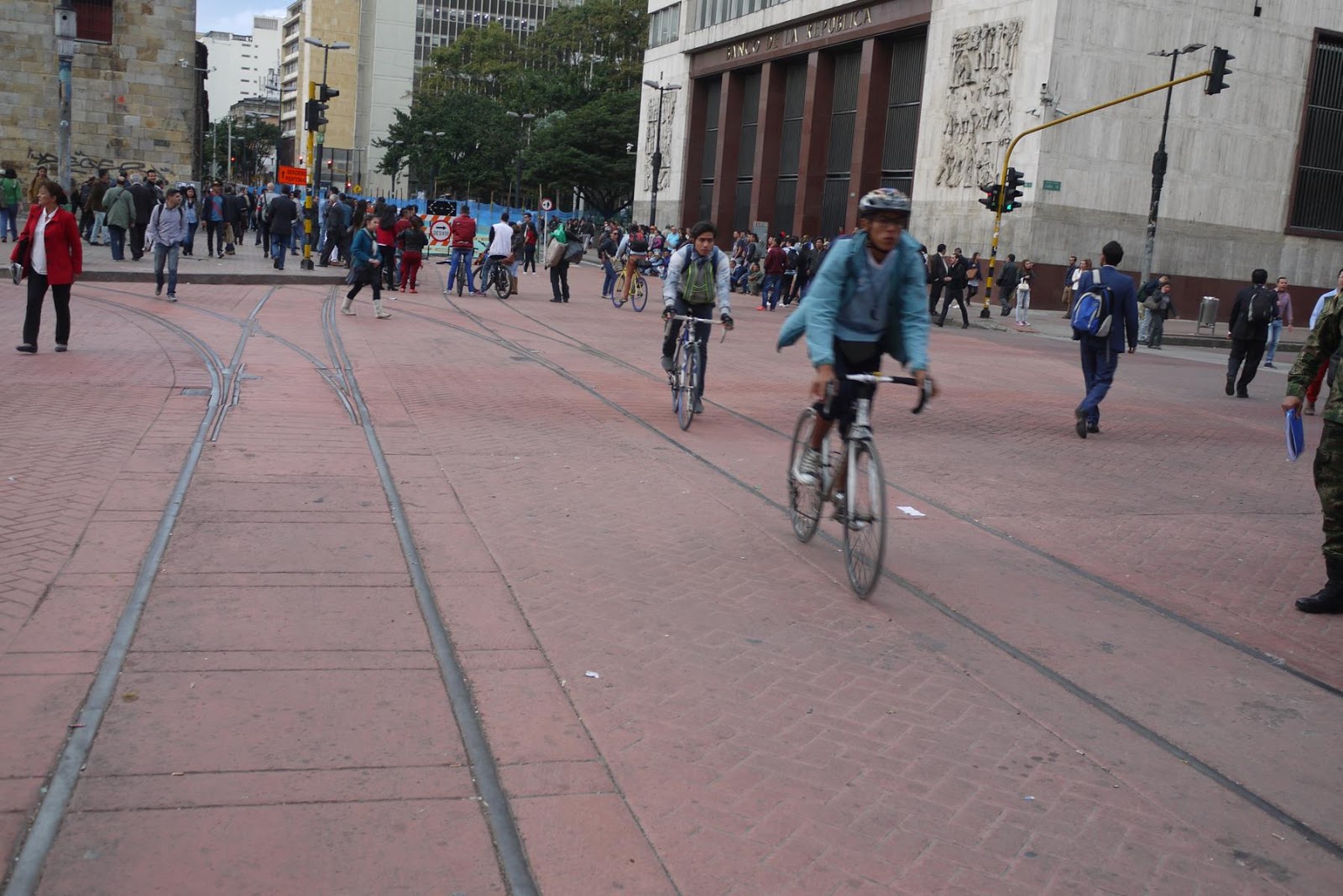
On Carrera Septima, near Calle 21, streetwork has exposed the old Tranvia rails.
The roadwork on Carrera Septima north of Calle 19 have unearthed something which will bring back memories for the very old Bogotanos: Old tranvia rails.

Tranvia rails preserved on Calle 10 and Carrera 9.
After more than a half century moving bogotanos about without poisoning the air, the legendary tranvia, or streetcars, were mortally wounded during the 1948 bogotazo. A few years later, the mayor had the rails covered with asphalt, entombing the system. A few dozen meters of rails were left exposed as a sort of memorial on Carrera Septima at Jimenez Ave, and in a few other spots the rails remain visible. And during pedestrianization work on Carrera Septima in 2015, workers also uncovered old rails.

The tranvia was first created in the 1880s, when it was pulled by horses and mules. In 1892, the wooden rails were replaced with iron ones. About 1910, electricity began replacing animal power. In April, 1948, during the Bogotazo riots, many of the railcars were pushed over and burned.

Since then, buses, often loud and polluting, have ruled the city, despite occasional plans to build a new tranvia along La Septima.


On Carrera Septima, near where Jorge Eliecer Gaitán was assassinated, triggering the Bogotazo riots, the tranvia rails have been preserved as a memorial. The riots destroyed the tranvias.
El Tranvia restaurant in Chapinero, by la Iglesia de Lourdes.

A map of the old tranvia network, in the street on Carrera Septima. Tranvia lines extended to Chapinero to the north and to the west to Plaza España. 
A plaque on Carrera Septima says that rich and poor rode the tranvia together, all equal as long as they could pay the fare.


The old tranvias at work.


The tranvias were pulled by mules and horses until about 1910, when electrification began.
Tranvia cars burning during El Bogotazo in April 1948.

"I was convinced that that sservice was a danger in the streets of Bogotá and that it had to be ended." Bogotá Mayor Fernando Mazuera Villegas explaining why he had the tranvia's rails covered with asphalt a few years after the bogotazo. (Plaque on Carrera Septima.)

By Mike Ceaser, of Bogotá Bike Tours
Friday, April 10, 2015

Where the Victims Lie?


El Parque del Renacimiento may have ended a mystery with this unimpressive monument to the thousands of people killed during the 1948 Bogotazo, who are supposedly buried underneath the park, whose name means 'Rebirth.'

The monument didn't seem to include any evidence for the remains' presence below the park, which was once the Children's Cemetery. But the remains' presence here would be logical, since I've seen photos of hundreds of corpses laid out in the nearby Cementerio Central.

If true, tho, maybe it explains why the park is so often vacant.

The park's monument.
An image of a newspaper headline reporting Gaitan's assassination 'by an agent of the government.' In fact, Gaitán was apparently assassinated by a mentally unstable man who had an obsession with the political leader.


Gaitán speaks in the Santamaria Bullfighting Stadium.
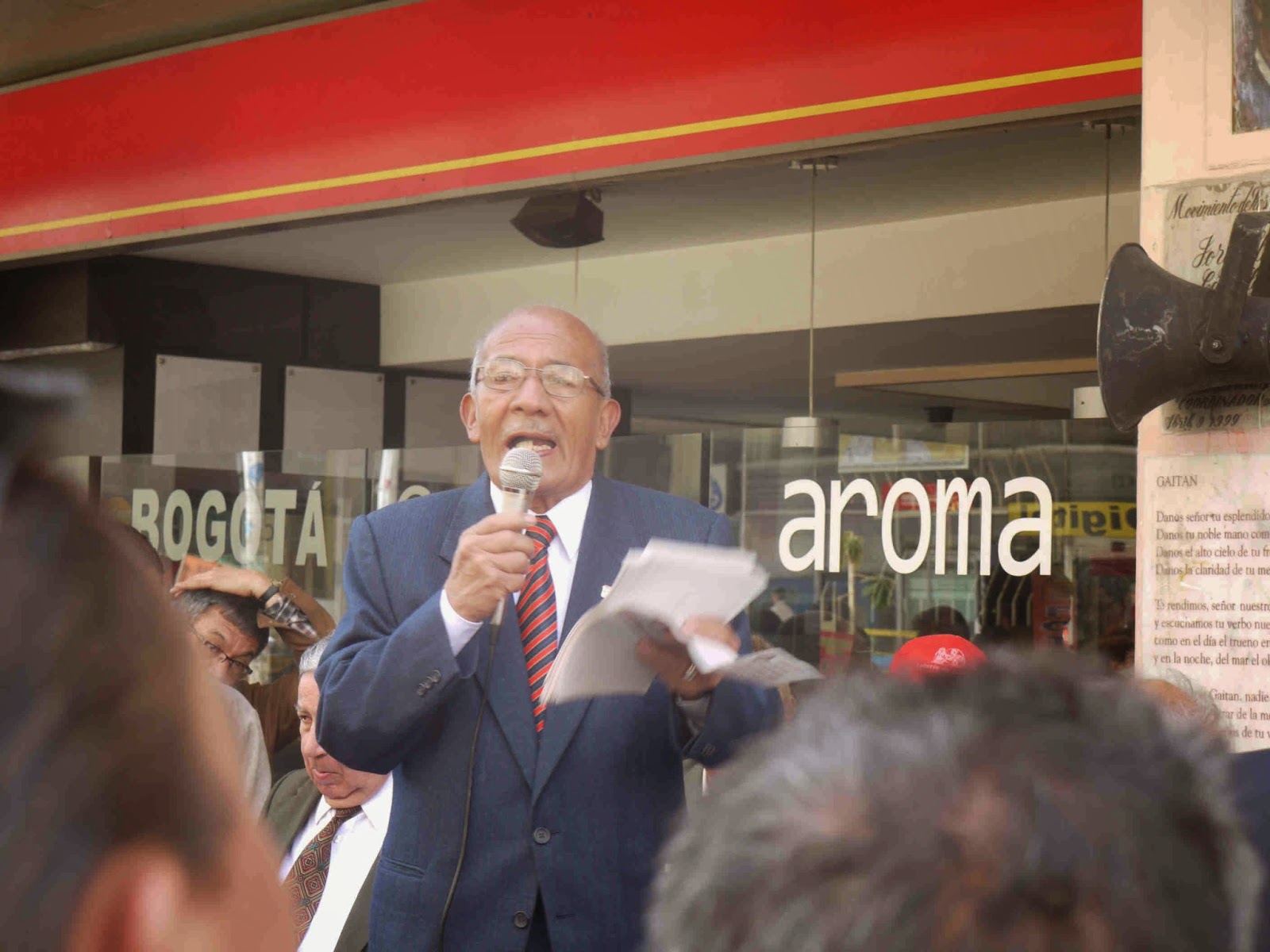
Yesterday, passionate followers of Gaitán held this rally by the spot on Ave. 7 and Jimenez Ave.

A Gaitanista makes an angry speech calling for Latin American unity.
An image of a smiling Gaitán.
A man sells DVDs of Colombian history.


By Mike Ceaser, of Bogotá Bike Tours

Saturday, September 21, 2013

Scenes Along La Septima


An exhibition of winners of a photo contest of scenes along Ave. Septima displayed in Bogotá's Parque Nacional. 
The winners of a photography contest about Bogotá's iconic Ave. Septima, displayed in the Parque Nacional, coincided today with historic scenes of Bogotá displayed on the walls along Ave. Septima itself.

Probably Ave. Septima's most iconic and history-laden spot, the intersection with Jimenez Ave. The tracks are reminders of the old streetcars, which were pushed over and burnt during the 1948 Bogotazo riots following the assassination on this intersection of politician Jorge Eliecer Gaitan. 

Adding a photo of an historic building - but which one?

A destroyed streetcar during El Bogotazo.


A boy stands in front of a burning streetcar during El Bogotazo.

A scene of destruction, perhaps the aftermath of El Bogotazo.
Transvestites walk along La Septima. 
The statue of revolutionary leader San Martin on La Septima, near the old Bavaria brewery and the Museo Nacional.


An entertainer along La Septima. 


By Mike Ceaser, of Bogotá Bike Tours