Showing posts with label flowers. Show all posts

Wednesday, February 14, 2018

A Visit to Paloquemao's Morning Flower Market


Today is Valentine's Day - a big day in Colombia, if only because flowers drive a chunk of the economy. Over recent decades, Colombia's flower exports have bloomed, mostly to the United States (and at the expense of the U.S.'s domestic flower market, which has wilted), thanks to greatly reduced tarrifs. 

So, what better place to commemorate Valentine's Day than in Paloquemao's morning flower market, which we sometimes visit during our bike tours.


By Mike Ceaser, of Bogotá Bike Tours

Sunday, May 12, 2013

Mothers' Day at the Central Cemetery

Ribbons for mothers hang on a wall near the cemetery's entrance. 
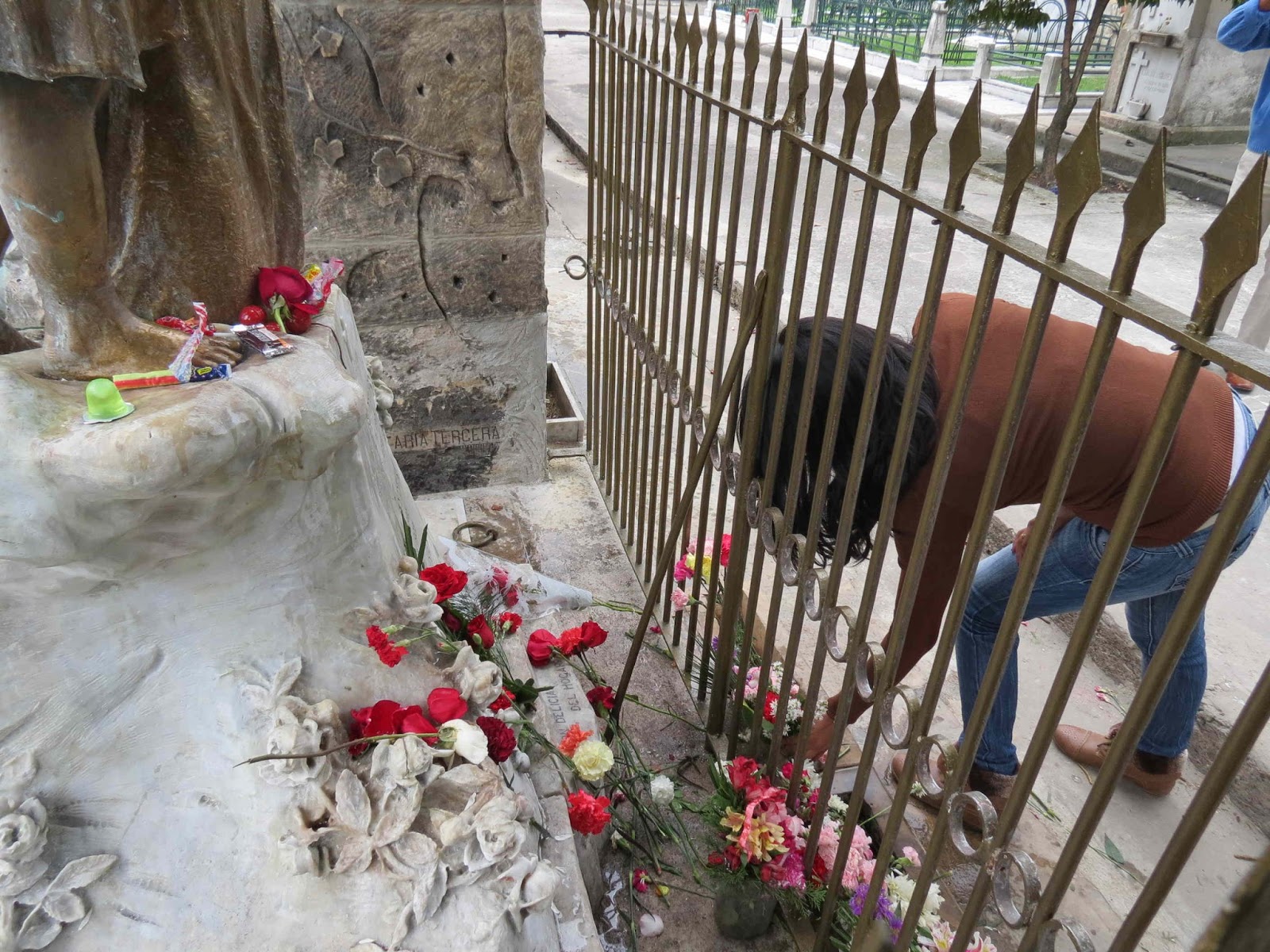
A cemetery visitor leaves flowers at the memorial to the four Bodmer girls, who died around the turn of the century.  
A flower and other gifts for the Bodmer girls. 
Flower stalls near the cemetery. Mother's day is a big day for them - or should be. 
This woman, who sells flowers with her son inside the cemetery gates, told me that they were the cemetery's first vendors. 
Another vendor, who has sold on the sidewalk for 45 years near the English Cemetery. She can't earn more than a few thousands pesos a day, but is always cheerful. 
Cecilia and her daughter Yolanda have vended flowers near the cemetery for 50 years. They said that on an average day they can sell 25,000 pesos in flowers - but they spend half of that buying the flowers, more on renting the storage space and another couple thousand pesos on bus fare to and from Soacha, where they live. 
Cecilia said that decades ago when the cemetery was larger they "sold all the flowers they could cut." Today was a disappointment for her, with only 30,000 pesos of income. "We didn't make anything," she said.


Cecilia pays 100,000 pesos per month to store her flowers behind the cemetery, between the headstone carvers' shops. 


By Mike Ceaser, of Bogotá Bike Tours

Monday, September 17, 2012

Visiting Garavito's Tomb

Placing flowrs on Garavito's grave. 

Sunday and Monday are the big days in Bogotá's Central Cemetery. That's when the faithful visit the tombs they believe can grant miracles.

Two of the unlikeliest saints, Bavaria Beer founder Leo Kopp and astronomer Julio Garavito (the guy on the 20,000 peso bill), were bedecked with an extraordinary quantity of flowers today.

Visitors to Garavito's tomb traditionally rub a 20,000 bill against the column, which is supposed to attract wealth to the rubber. The tomb also happens to be the cemetery's traditional spot for smoking pot. Today, one pothead told me that smoking weed there brought one even more money.

Or, perhaps the connection is that both potheads and astronomers like to get high.


Believers line up at the tomb of Bavaria Beer Brewery founder Leo Kopp...

...who was covered with flowers.
By Mike Ceaser, of Bogotá Bike Tours

Thursday, March 8, 2012

Women's Day in Colombia: Not So Rosy

Students walk past flowers for sale on Jimenez Ave. near Los Andes University. 
Women's Day brought a flowering of flowers. On nearly every corner, vendors hawked roses, and the flower market in Palo Quemao was much larger and longer-lasting than usual.

Men carry buckets of
flowers in La Candelaria. 
But, despite the great number of colombianas carrying flowers today, not everything is coming up roses for Colombian girls and women. They earn less than men, do more unpaid work and suffer disproportionately from Colombia's armed conflict.

Colombian women also make up only about 10 % of the legislature and have only limited rights to abortion. A macho culture and Catholic rules against birth control use also contribute to high teen pregnancy rates, which make it more difficult for young women to finish school and get good jobs.

Even so, in 2006 Colombia was ranked one place above the U.S. in gender equality.
Flowers for sale on Plaza San Victorino. 
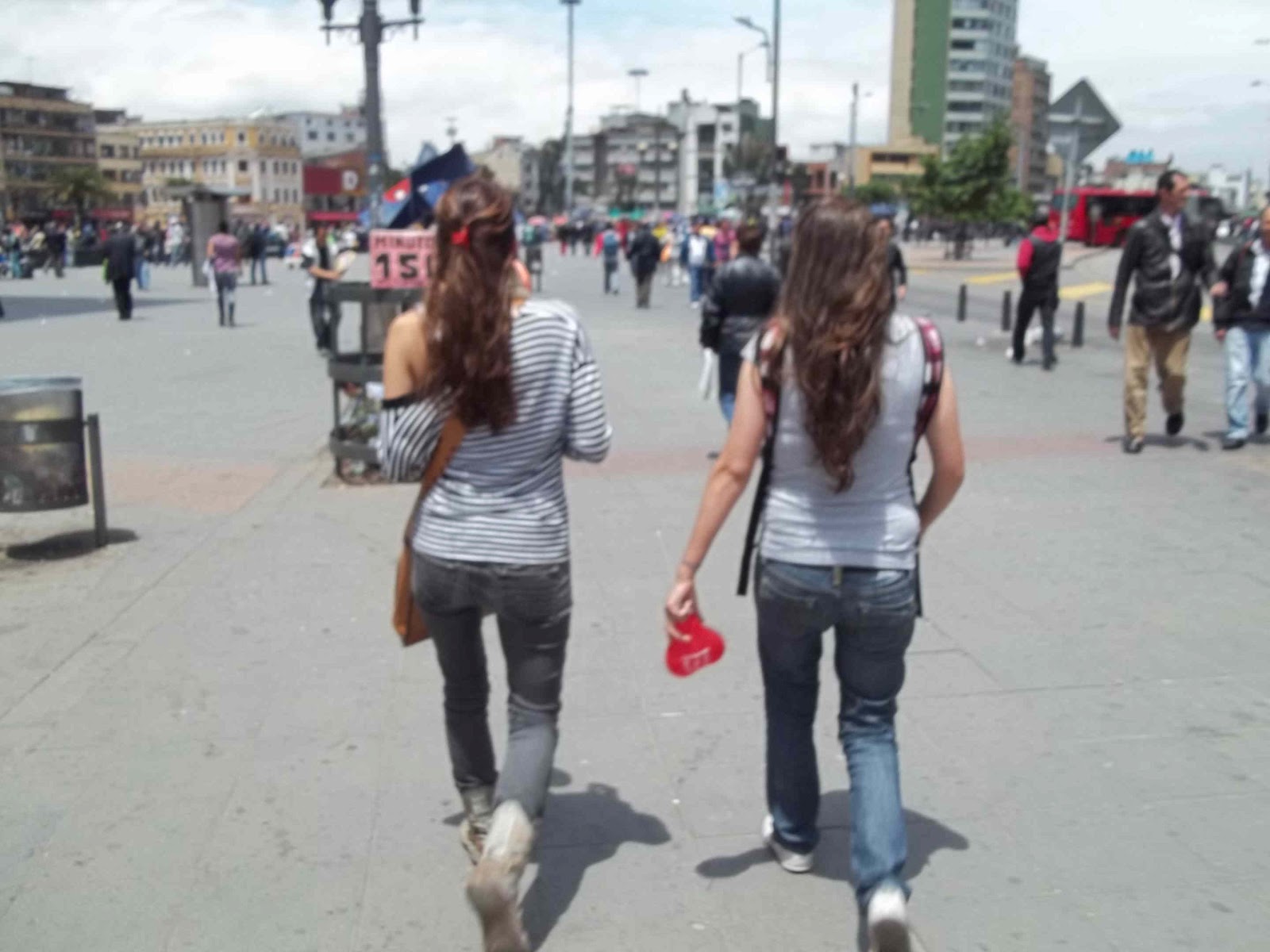
Young women, perhaps students at the elite Los Andes University, walk past a street vendor on Jimenez Ave.  
There's also a huge gap, as there is throughout Colombian society, between the small, educated class  of wealthy women and the rest of society, who end up with low-skilled work.  

A young woman carries a heart-shaped gift across Plaza San Victorino. 

A flower cart in Palo Quemao. 

Green litter left behind by Palo Quemao's flower market. 

Selling flowers on a streetcorner. 
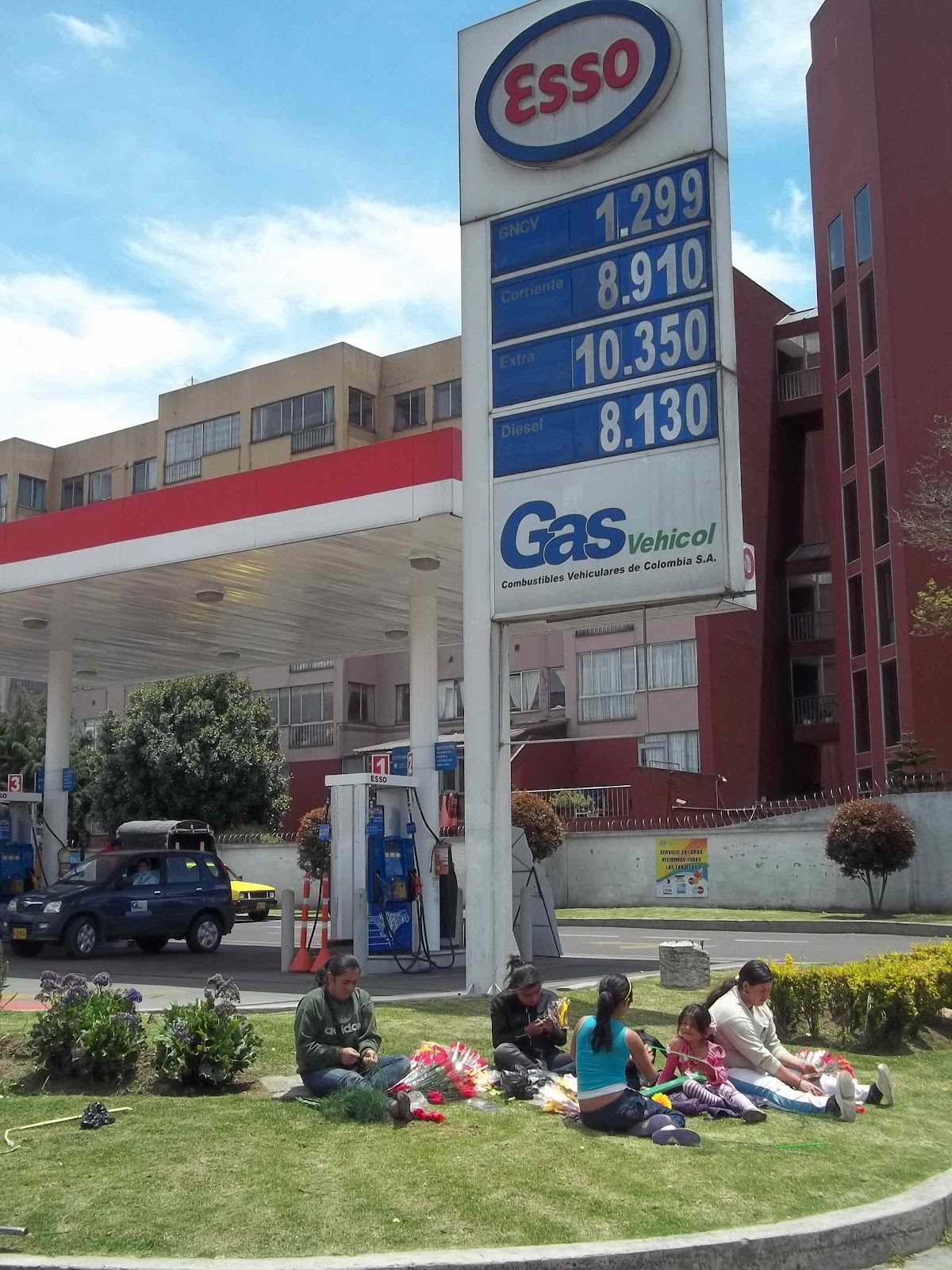
Flower-sellers rest under a gas station sign near Palo Quemao. 
Related: The Millenium Goals and gender equality in Colombia.

By Mike Ceaser, of Bogotá Bike Tours

Tuesday, February 14, 2012

A Fascination With Flowers

Selling flowers in front of Bogotá's Central Cemetery.
Colombia is the world's second largest flower exporter, after Holland. Valentine's Day is the peak of the flower industry and some 80% of Colombia's flower exports during this period go to the United States.

Arranging flowers. 
Flowers are Colombia's second-largest agricultural product after coffee, and generate some 150,000 jobs here in Colombia. But the industry is under pressure, because of lower-cost competitors including Ecuador and Kenya, and the increasing value of the Colombian peso.

But the industry has often been accused of overworking its employees, most of whom are women, and sometimes subjecting them to unsafe working conditions, including exposure to pesticides. Some companies reportedly require their women employees to have had undergone sterilization so that the companies don't become liable for maternity benefits.

The less-than-perfect flowers are sold here in Colombia, where the inexpensive flowers are popular for decorating, especially in cemeteries.


Flowers beside a reproduction of a San Agustin monument. 


Older women flower vendors outside the Central Cemetery. 
Soldiers carry flowers in Palo Quemao Market. 

A flower cart in Palo Quemao Market. 


The tomb of Leo Kopp, Bavaria brewery founder and a popular saint. 

Leo Kopp with a crown of flowers. 
The tomb of Julio Garavito, who is on the 20,000 peso bill. 

A flower worker in Palo Quemao Market. 

By Mike Ceaser, of Bogotá Bike Tours