Showing posts with label courts. Show all posts

Monday, March 9, 2015

Friends in High Places

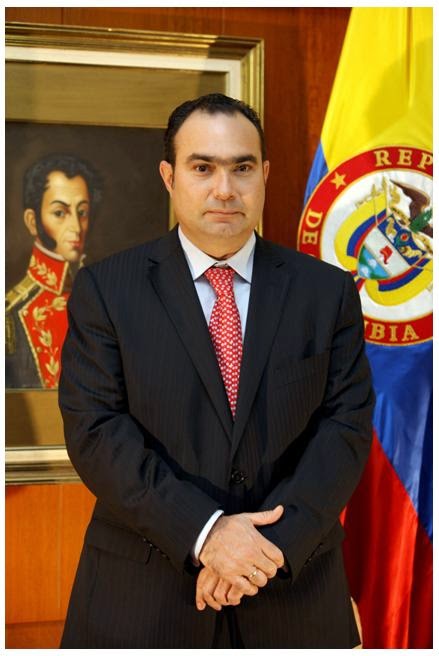
Judge Pretelt: In the middle of the storm.
When El Tiempo columnist Maria Isabel Rueda recently interviewed Constitutional Court Pres. Jorge Pretelt, she was impressed that Pretelt brought along the court's ex-president, Rodrigo Escobar Gil.

Because magistrate Pretelt is embroiled in allegations that he demanded a 500 million peso bribe in order to reverse a ruling against the Fiduciaria Petrolera S.A. oil company, Rueda asked Escobar Gil whether he was working for that company, known as Fidupetrol.

Escobar told her he was not.

But a few days later, Rueda writes, she learned that Escobar Gil had in fact signed a contract to help Fidupetrol in its battle to reverse a 22 billion peso ruling by the Supreme Court against the company. Fidupetrol's case was in Escobar Gil's old stomping ground, the Constitutional Court.

The episode is in the news because Pretelt, the Constitutional Court's current president, stands accused of asking for a 500,000,000 peso bribe in order to produce a court ruling favoring Fidupetrol. As it turned out, the court ruled against the company. Its attorney Víctor Pacheco then accused Pretelt of demanding a bribe to ensure that Fidupetrol's tutela succeeded and then failing to fulfill his promise. Pretelt denies the bribery accusation, but acknowledges that Pacheco visited him at home. Pretelt has taken a leave of absence.

Victor Pacheco, the man who started it all.
Update: El Tiempo reports that Pacheco, apparently contradicting himself, told prosecutors that Pretelt had in fact instructed Pacheco to give money to another court judge, Mauricio Gonzalez. Pacheco later informed Gonzalez, who made the affair public.

El Tiempo examined Pretelt's finances and found that he has acquired a large amount of property over recent years. Pretelt denied any wrongdoing and pointed out that he comes from a wealthy family.

Whatever the truth about the alleged bribe, the mere fact of an ex-court president representing a company with a case before the court calls the high court's version of 'justice' into question.

'La Ley Para Los de Ruana' - A common saying meaning
that only the poor have to obey the law.
After all, who can doubt that a an ex-court high court magistrate - much less its president - still has powerful influences on the court, whose inner workings he knows intimately and on which he must still have friends and political allies?

In this case, Fidupetrol's machinations failed them. But how many powerful people and companies have bent courts to their interests thru bribery and undue influence? And if that's the case on Colombia's top courts, how much corruption is happening in local courts? I now that I've heard multiple stories about people slipping judges money to get convicted relatives off with light sentences. And, the repeated spectacle of drunken drivers responsible for fatal accidents receiving home detention also undermines faith in the courts.

To rebuild respect for its courts, Colombia needs to take a few basic steps, including requiring more transparency about court officials' property and income and prohibiting retired judges and other court officials from working on cases before the institutions they recently belonged to.


By Mike Ceaser, of Bogotá Bike Tours

Tuesday, December 20, 2011

Out of Uribe's Palace and Into Prison - II

Ex-Pres. Uribe: Better to leave
him off of your resume.
The procession of ex-Alvaro Uribe administration officials into legal trouble continues.

Already, ex-Pres. Uribe's Minister of Agriculture Andres Felipe Arias was arrested for alleged corruption in an agricultural subsidies program, which doled out support to the wealthy and influential, including a one-time beauty queen. Uribe's ex-chief of staff Bernardo Moreno was also jailed on charges stemming from the chuzadas scandal, in which Uribe allegedly ordered the DAS, or secret police, to spy on supreme court justices who were investigating him.

Hurtado: A free ticket home from Panama?
Now, Colombia has asked Panama to extradite ex-DAS Director Maria de Pilar Hurtado, who fled there after the chuzadas scandal broke. Top Panama politicians are reported to be divided on whether or not to hand over the one-time secret police chief. But a photo of Pilar Hurtado partying away in Panama while on the lam from charges in her own country didn't help her case.

Restrepo
Prosecutors have also called for the arrest of Uribe's Peace Commissioner, Juan Carlos Restrepo, on charges related to an allegedly staged demobilization of FARC guerrillas in 2006. Allegedly, non-guerrillas were hired to pretend to be guerrillas turning in their weapons to generate positive P.R. for the government.

The ex-Uribe officials' legal travails are a dramatic turnaround for an administration which ended with enormous popularity for its progress against Colombia's leftist guerrillas. But the charges could also indicate Uribe's willingness to ignore legality and civil rights in his determination to beat back the guerrillas and perhaps extend his own power.

Uribe's popularity was such that he succeeded in having the Constitution amended to enable him to run for a second term. And, his popularity would almost surely have carried him to a third consecutive term if the high court had not ruled that unconstitutional.

Uribe himself has encountered legal troubles in the United States, where he's been called to testify in a case involving alleged crimes by paramilitary groups.

But the cases also indicate once again the Colombian court's independence and their willingness to go after even popular figures. To his credit, current Pres. Juan Manuel Santos, who was Uribe's defense minister, has not interfered with the cases.

Related: Out of the Palace and Into Prison

The Greatest Show in Colombia?

By Mike Ceaser, of Bogotá Bike Tours

Sunday, July 10, 2011

Gay Marriage in Colombia?

Marchers during this year's gay pride parade wave signs demanding equal rights from the court. 
Colombia's Constitutional Court is to rule by July 22 on whether or not same-sex couples should be able to marry in Colombia.

According to El Tiempo's analysis, the justices are about equally split on the matter. Advocates argue that gay marriage is a matter of equal rights, opponents that it violates religious principles and would deprive children of the right to be raised by a father and a mother.

Signs during Bogotá's 2011 gay pride parade demand equal rights for sexual minorities. 
The court already considered the issue once, last November, and ruled that the proponents should rewrite and resubmit their case. In the past, after asking rights advocates to resubmit their cases, the justices have ruled in the advocates' favor.

But is conservative, highly-Catholic Colombia ready to see two men or two women walking down the aisle? Actually, it's sort of already happened, since same-sex civil unions have existed here for several years. Of course, the Catholic Church and other religious groups will complain. But they've complained about the legalization of abortion, euthanasia and other issues, with little effect. In any case, the Catholic Church's moral standing on some of these issues is less than immaculate.

By Mike Ceaser, of Bogotá Bike Tours