Showing posts with label indigenous people. Show all posts

Wednesday, December 13, 2017

Doubling Down on Climate Change


The World Bank will stop financing oil and natural gas prospecting and drilling projects after 2019, but Colombia's oil industry vows that won't slow its exploitation of the dirtiest sorts of hydrocarbons.

So, even tho Colombia will be hard hit by climate change: it will lose biodiversity, coffee-growing regions will suffer, its glaciers will melt and the city of Cartagena may be left as an island - its oil sector sees no reason to reduce its contribution to that crisis.

That means investing some US $42 billion over the next two decades, say oil industry officials to drill
Colombia's non-conventional hydrocarbons
are in some of its most biodiverse regions.
some 7,000 new wells and perhaps double Colombia's new hydrocarbon production by increasing controversial methods such as fracking, which some experts warn threatens Colombia's water supply.

'Colombia doesn't have the luxury of leaving these resources in the ground,' the El Espectador newspaper writes, in what sounds like a quote from an oil executive.

Unfortunately, the cost of pumping out these resources, in lost biodiversity and natural areas, and particularly in destruction from climate change, may far outweigh its oil income. But nobody appears to be considering that side of the balance sheet.

Colombia can't stop climate change on its own - and it may in fact be way too late to stop it at all. But once it really gets going, Colombia will have nobody to blame but itself.

And many of the non-conventional resource blocks overlap indigenous territories.
By Mike Ceaser, of Bogotá Bike Tours

Monday, June 12, 2017

Equal Opportunity Evil

A family's memorial to their daughter, who, along with her boyfriend, was murdered, chopped to pieces and thrown into a river by paramilitaries.
A few of the disappeared, who number in the tens of thousands.
A photo exhibition on now in the Centro de Memoria on Calle 26 beside the Central Cemetery makes a simple point: In Colombia's long conflict, there are no good guys. The leftist guerrillas, right-wing paramilitaries and even the government forces have all committed terrible crimes.

The victims of all sides, and the only good guys, are Colombia's civilians. Kidnapped, 'disappeared' and driven out of their homes and off their land, civilians have been attacked by groups which often claim to be defending them.
Displaced Embera indigenous people.

Today, the FARC guerrillas, Colombia's oldest and largest guerrilla group, are turning in their weapons and demobilizing. However, where the FARC go away, other illegal groups try to move in to take over the guerrillas' drug trafficking, extortion and illegal mining businesses.


Displaced Emberá Chamí indigenous people.

The Centro de Memoria, off of Calle 26 near the Central Cemetery.

Sadly, the Centro de Memory, including its exhibitions, is usually vacant.


Female guerrillas. Young people in parts of rural Colombia may join illegal groups because they know no other authority.
Girls and women in guerrilla groups may be exploited sexually and forced to have abortions.

Indigenous guards, who have struggled to exclude other armed groups from their territories.

Burying a pregnant woman, apparently murdered with government collaboration.
By Mike Ceaser, of Bogotá Bike Tours

Wednesday, May 17, 2017

The Gunadules' Art from the Universe

A  mola with modern influences.

One of Colombia's least-known indigenous peoples, the Gunadules, also known as the Kunas, Cunas o Tules, lived in pre-Columbian times in northern parts of Colombia and the Darien peninsula, but were driven into what is now Panama by conflicts with the Spanish and other indigenous groups. Only a few thousand still live in present-day Colombia.

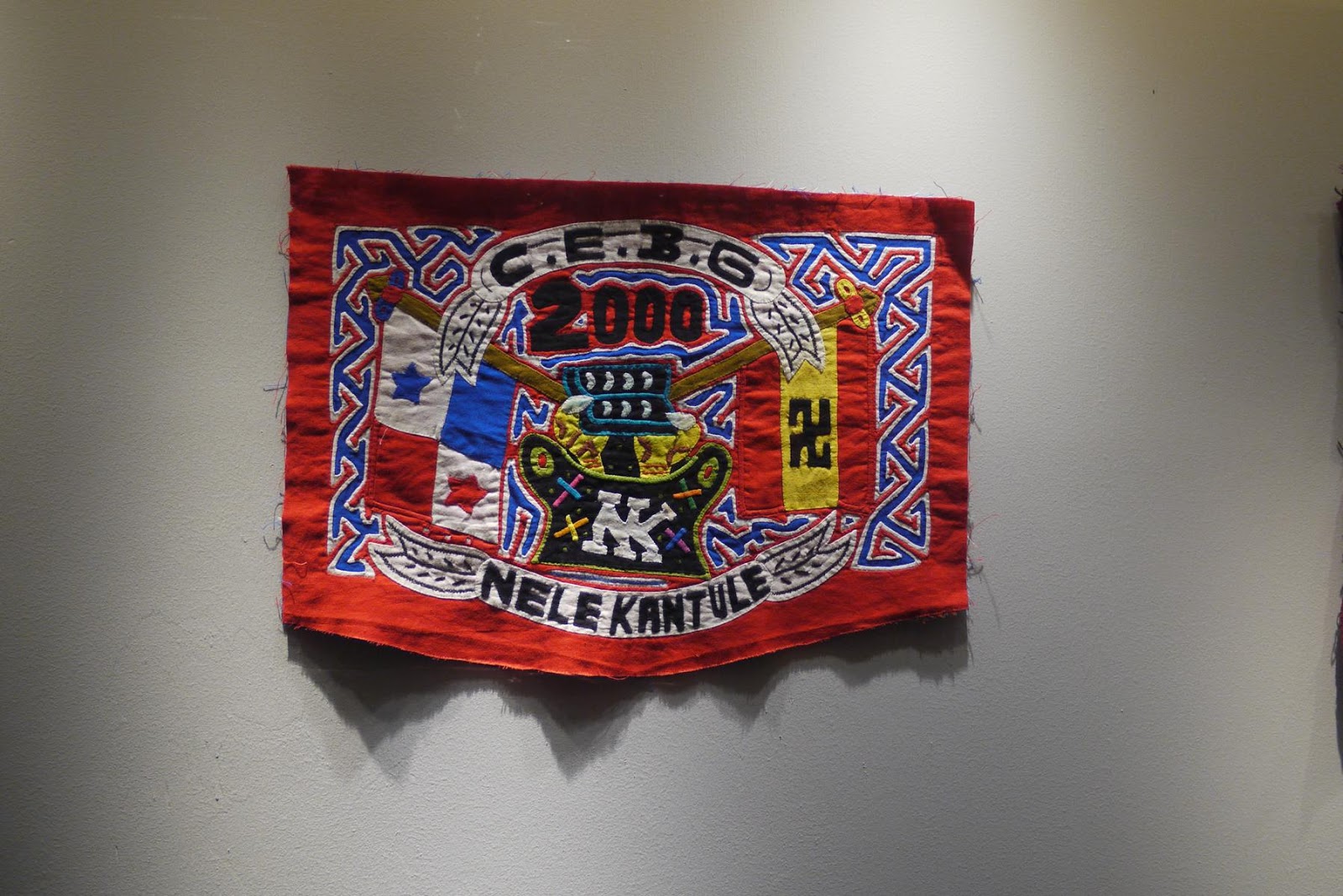
In 1925, the Kunas rebelled against the Panamanian government and achieved a measure of cultural autonomy - and also adopted a flag with a swastika, which they still use.
Most Gunadules now live in Panama.

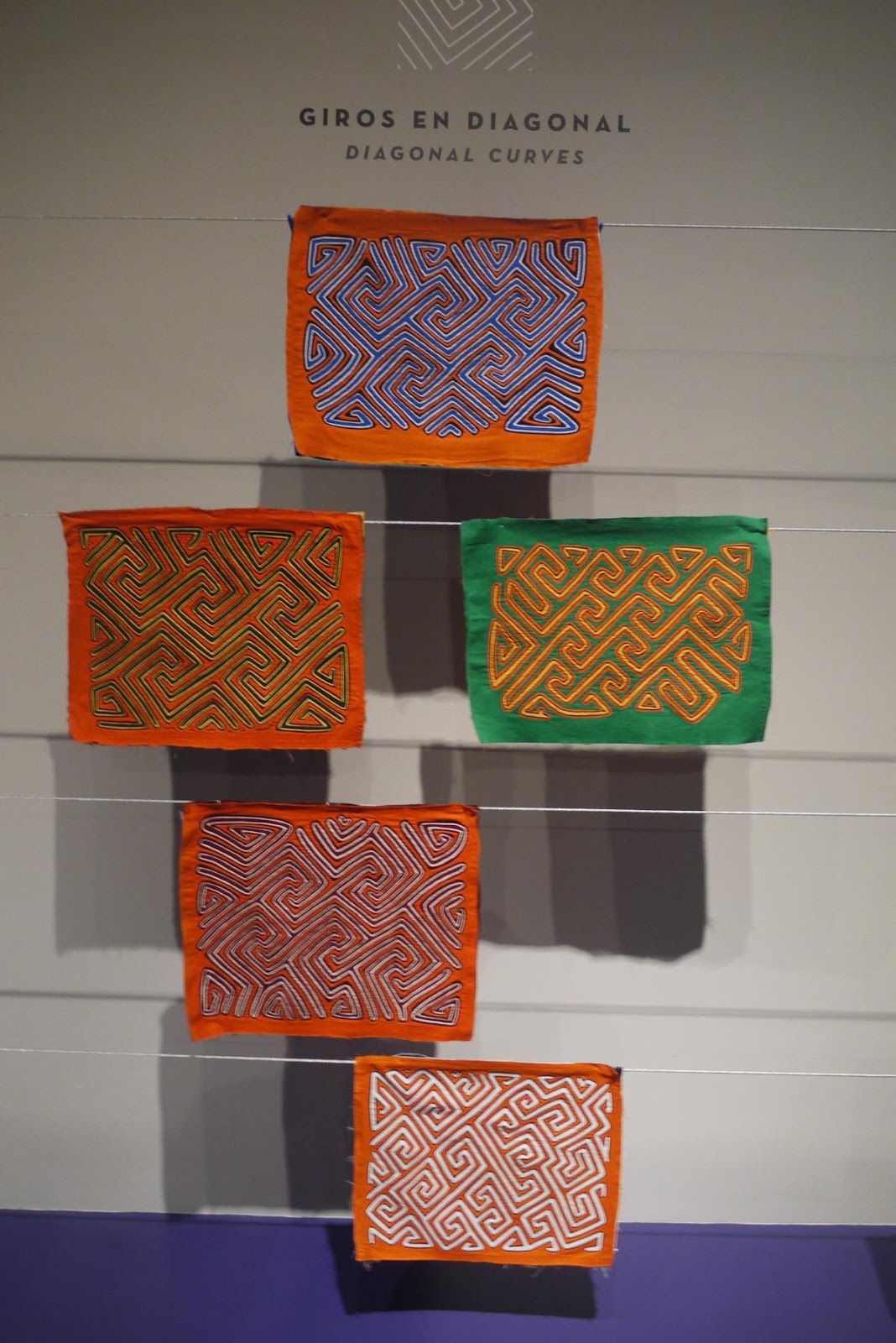
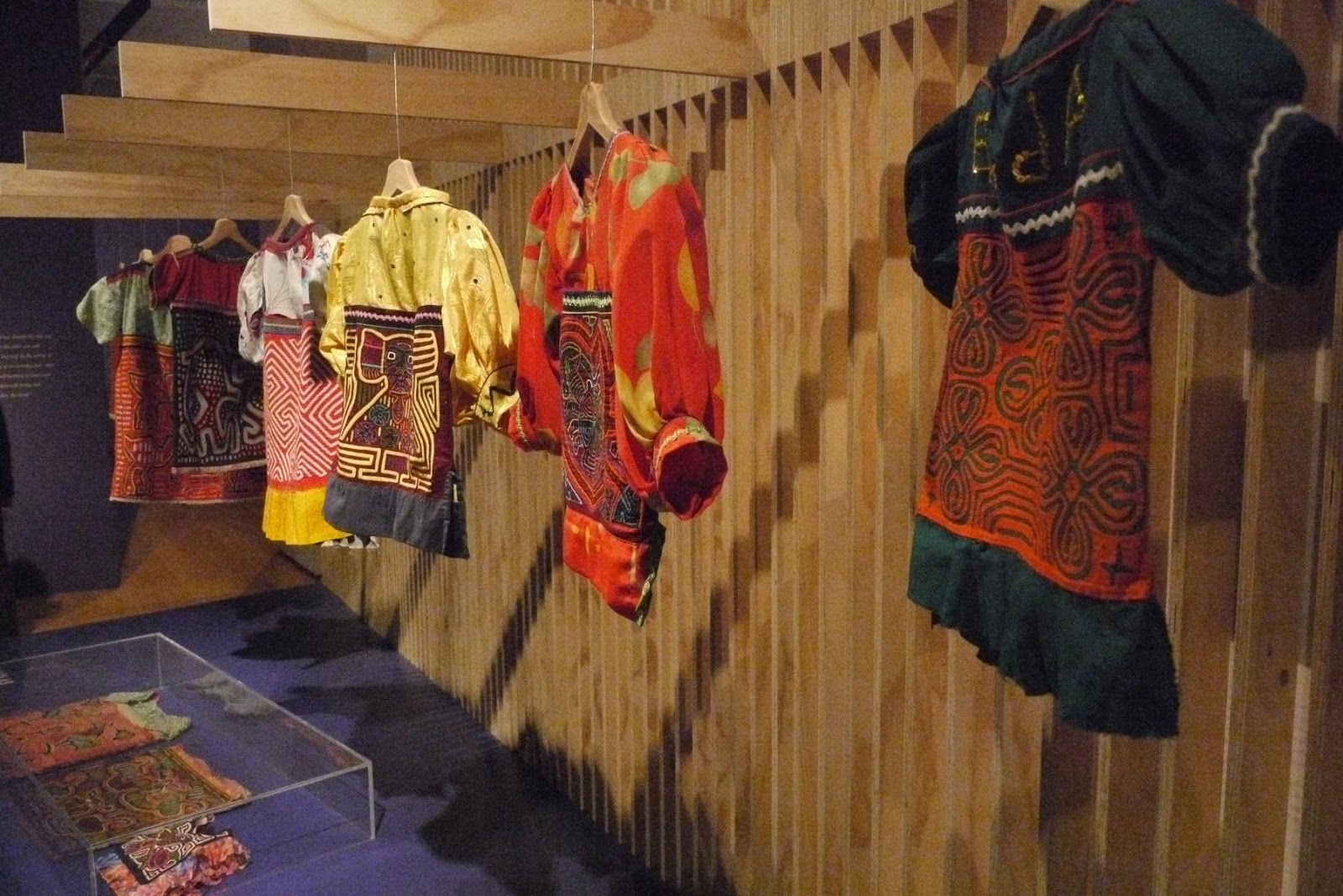
The Gunadule women are famous for sewing molas, which have a spiritual and artistic significance. According to Gunadule mythology, a woman traveled through the universe, which is divided into layers or capas, to bring back the secret of the molas.

An exhibition of molas, and other Gunadule artwork, is on now in the Museo de Oro in Bogotá.


When a figure cracks, it loses its spiritual value.


A bird.


Molas come in all colors.

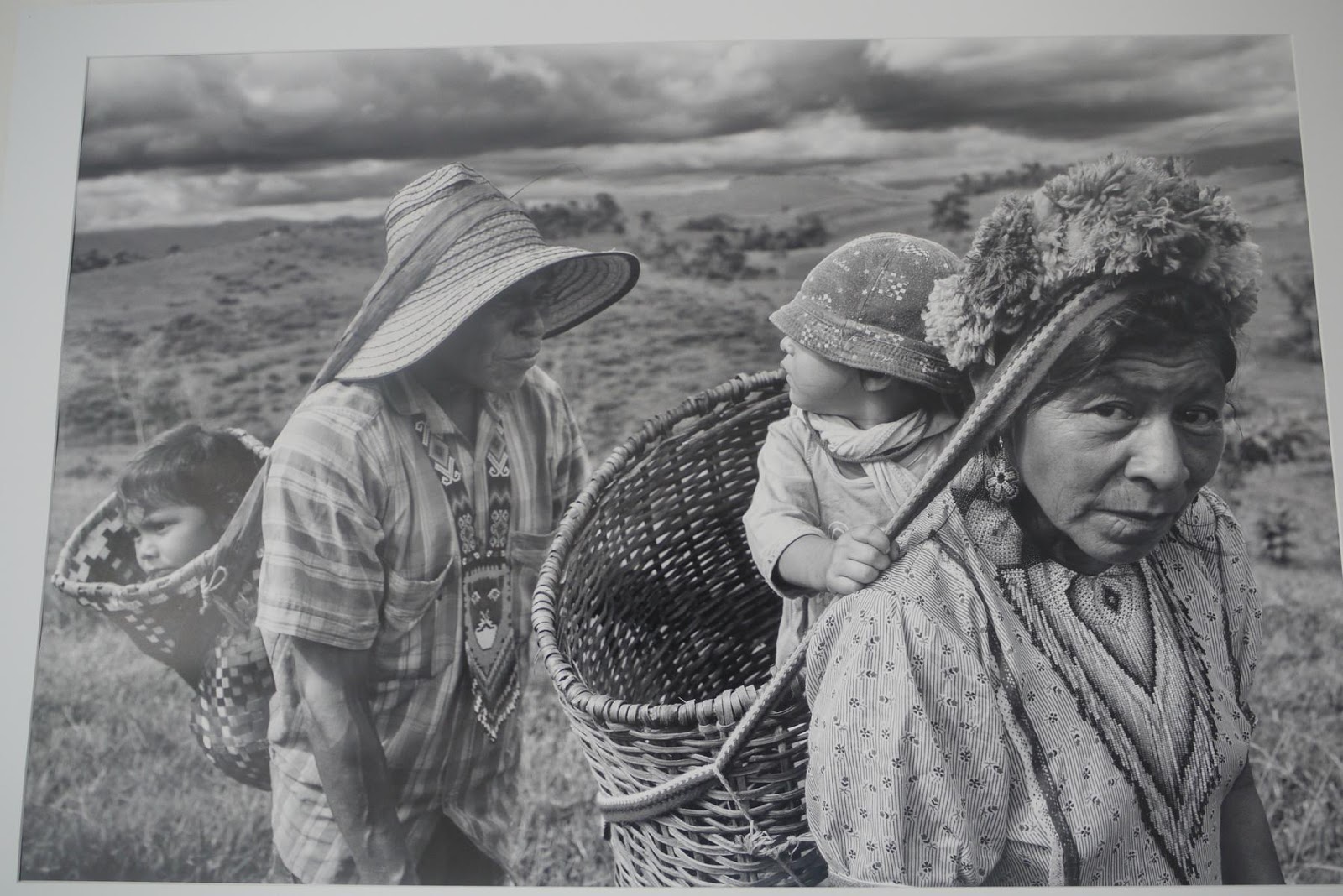
Gunadule indigenous people.

Their flag includes a swastika.


Cultural influences: Old Milwaukee.


By Mike Ceaser, of Bogotá Bike Tours

Tuesday, September 1, 2015

Turning the Historical Tables


Five hundred years ago, foreigners occupied the lands of Colombia's indigenous people, taking the land away to use for agriculture and mining.

Today, dozens of indigenous Colombians and campesinos occupied the Ministry of Agriculture on Jimenez Ave. in central Bogotá today, making demands which however weren't very clear to the public.

In the morning, an indigenous man whom I asked about their demands refused to tell me - which struck me as not the best way to obtain those demands.

According to El Tiempo, the protesters are demanding that the government fulfill certain agreements, basically involving money. That seemed to be the view also of the police standing by the protest.

"It's all about money," a police officer told me.

A crazy man gestures at the protesters.
But a woman protester told me that their demands also included land redistribution and an end to killings of indigenous people. Then, one of her companions called her away, apparently to stop her talking to an outsider. Then, another protester asked me to stop taking pictures "for the safety of the people," even tho I'd seen people taking their pictures all day long, and their photos are on El Tiempo's and other websites.

 This evening, the occupiers were still there - perhaps justifiably, since only a few centuries ago this was all indigenous territory.

The sign says 'We are not terrorists.'

Riot police wait across the street.
By Mike Ceaser, of Bogotá Bike Tours

Thursday, April 30, 2015

The Muiscas' March


A few photos of the Muisca Indigenous people's protest on Plaza Bolivar the other day. I wasn't able to get a lot of details about the protest's motive, except that the Muiscas feel that outsiders are building on their tribal lands without asking their permission. Indigenous people have been involved in many land disputes, often because they often lack formal documents for their traditional lands.


By Mike Ceaser, of Bogotá Bike Tours