Showing posts with label language. Show all posts

Thursday, July 4, 2013

English, the Long-Suffering Language

A restaurant for people, or for fish?
As English has become the world's language, it's suffered at the hands of non-speakers who believe it's cool to use English - even when they don't know how to.

A few examples I've seen around Bogotá.

The barber ghetto shop is in Teusaquillo, which is no ghetto.

This band wears bibs!


This is supposed to mean something.
A light kiosk - as opposed to a full-calorie kiosk?

Does Independence Park also have a Kiosk Heavy?

Almost got it!
Just in case you missed it the first time.
You'd think that the Museo de Oro (Gold Museum) could pawn a few nuggets and buy an English grammar book.


Can you understand?
'American School Way'. It'd be good enough - if they weren't supposed to be TEACHING English.
And a classic from the city of Cali.

A medal from the 2013 World Games in Cali left out a critical 'L', giving the competition a whole new meaning. 
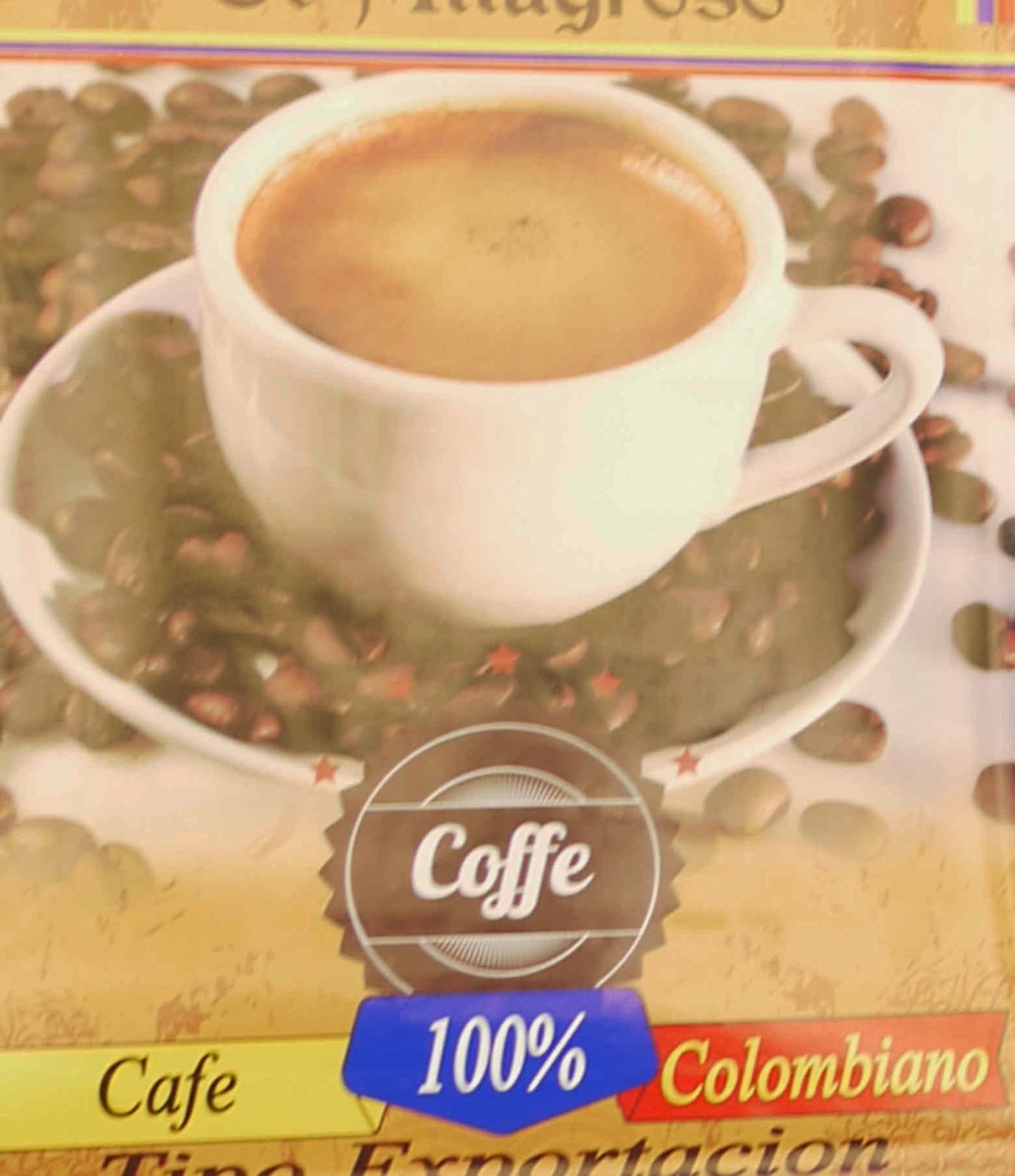
This restaurant in La Candelaria managed to spell 'coffee' incorrectly twice - and in two different ways. 
coffe
Coofee
'Specialists in Frecuency Brain.' Sounds impressive, unless you know something about biology, psychology or English. 
Another victim of Google Translate.
By Mike Ceaser, of Bogotá Bike Tours

Thursday, May 3, 2012

Rufino José Cuervo


Some of Cuervo's books, which he donated to the Biblioteca Nacional. 
Cuervo beer.

Rufino José Cuervo (1844-1911), who is on exhibit for a few more days in the National Museum, was probably Colombia's most accomplished linguist and chronicler of Colombian Spanish - and has lots of influence on those of us learning to speak Colombiano, whether we know it or not. His most famous works were 'Critical Notes About the Language of Bogotá' and the Dictionary of the Construction and Regime of the Castilian Language.'

But be glad that you never had this guy for a Spanish teacher. His overarching concern was that Spanish might splinter into regional tongues the way that Latin fragmented into Spanish, French, Portuguese and others. And so he probably wouldn't have approved of modern Colombia's rich slang vocabulary such as 'parce' and 'veci' and 'marica.'

The Language of Bogotá, which has
changed lots since Cuervo's time. 
The man studied and spoke dozens of languages, ranging from Portuguese, French and Latin, to Hebrew, Sanskrit and Lithuanian. But his life wasn't all dry. Cuervo's family brewed Bogotá's first beer, Cerveza de Cuervo, in their home on Calle 10 below Carrera 4 in La Candelaria. That building is now the Caro y Cuervo Foundation, which studies language, surprise, surprise.


Cuervo's death mask. 

A view of the exhibition in the Museo Nacional, which was originally built to be a prison. 
Beermaking back then. 

Poet Rafael Pombo, Cuervo's good friend. 
The Instituto Caro y Cuervo, on Calle 10 in Bogotá's La Candelaria neighborhood. 
Rufino Cuervo's tomb in Bogotá's Central Cemetery. 
By Mike Ceaser, of Bogotá Bike Tours , which also has La Candelaria's largest collection of used books in English, French, German, Dutch and other languages for sale and exchange.

Wednesday, April 25, 2012

Language Exchange in La Candelaria


On a recent evening, a group of young Colombians and a few foreigners met in a restaurant in La Candelaria.

The Colombians spoke varying amounts of English and the foreigners apparently little Spanish. So they had trouble communicating - and that was exactly the point.

This may have been the neighborhood's first language exchange, a simple and entertaining form of second language practice, which also provides cultural exchange and even friendships.

This particular evening, in the Cafe Mestizo on Calle 9 and Carrera 2, attracted a mostly 20 and 30-something crowd. Almost all of the conversation was in English, probably because the gringos' Spanish was too rudimentary to assemble much more than a sentence. But the English speakers seemed satisfied to learn a bit about Colombian culture, travel and food.

Linda, a 33-year-old Bogotá accounting student, said she's always loved English, but had few opportunities to practice.

"That's what we need most - the opportunity to practice languages in a non-academic environment," she said.

Linda spoke a basic English, but seemed to lack confidence and conversed mostly in Spanish.

Across the table from her sat Freddy, 40, a local lawyer who wanted to improve his English to travel to Greece and Turkey.

At these events, "I can make dates and contacts for other activities," he explained, adding, "I'm not shy."

Freddy carried on a steady conversation in English with a couple from Vancouver, Canada seated beside him, who spoke almost no Spanish.

"We just needed enough (Spanish) to get by," the Canadian woman explained apologetically.

In fact, you don't need any Spanish at all to get by during a Colombian vacation - as long as you stay in the gringo bubble of hostels, hotels and tourist outings. But then you haven't really gotten to know much of Colombia.

At the other end of the table a young foreign man was entertaining three young Colombian women in English.

Alejandro Blanco, the event's organizer, said he'd considered trying a half hour in English, followed by a half hour in Spanish, but that that system seemed forced.

"It's was better just to let it flow according to the moods of the participants," he said.

This is one of several such language exchange events in Colombia, including one at the National University and Gringo Tuesdays in north Bogotá, which I've heard quickly devolves into a party.

Practica En La Ciudad's website.

By Mike Ceaser, of Bogotá Bike Tours

Monday, November 7, 2011

English a la Colombiana


My Doggish Veterinaria - Maybe this is why he gets on so well with canines.

The new old look: Dreadlooks. 

'Prohibiting the entry of perts.' Well, hopefully it's clear to the perts.
A brawny brownie. 

A sadwich? Appetizing?


Broaster, I suspect, comes from the English 'roasted.' 'Coffe' is a combination of the English words 'coffee' and the Spanish 'cafe.'

'Chicken Hell' Undercover vegans? Chicken Hell, in the red light district.

Well, rice IS food. This originally named restaurant has several restaurants in Bogota.
'Producto of Colombian.' The name says it all, in neither language. 


By Mike Ceaser, of Bogotá Bike Tours