Showing posts with label emeralds. Show all posts

Wednesday, November 8, 2017

Digging for an Emerald in Downtown


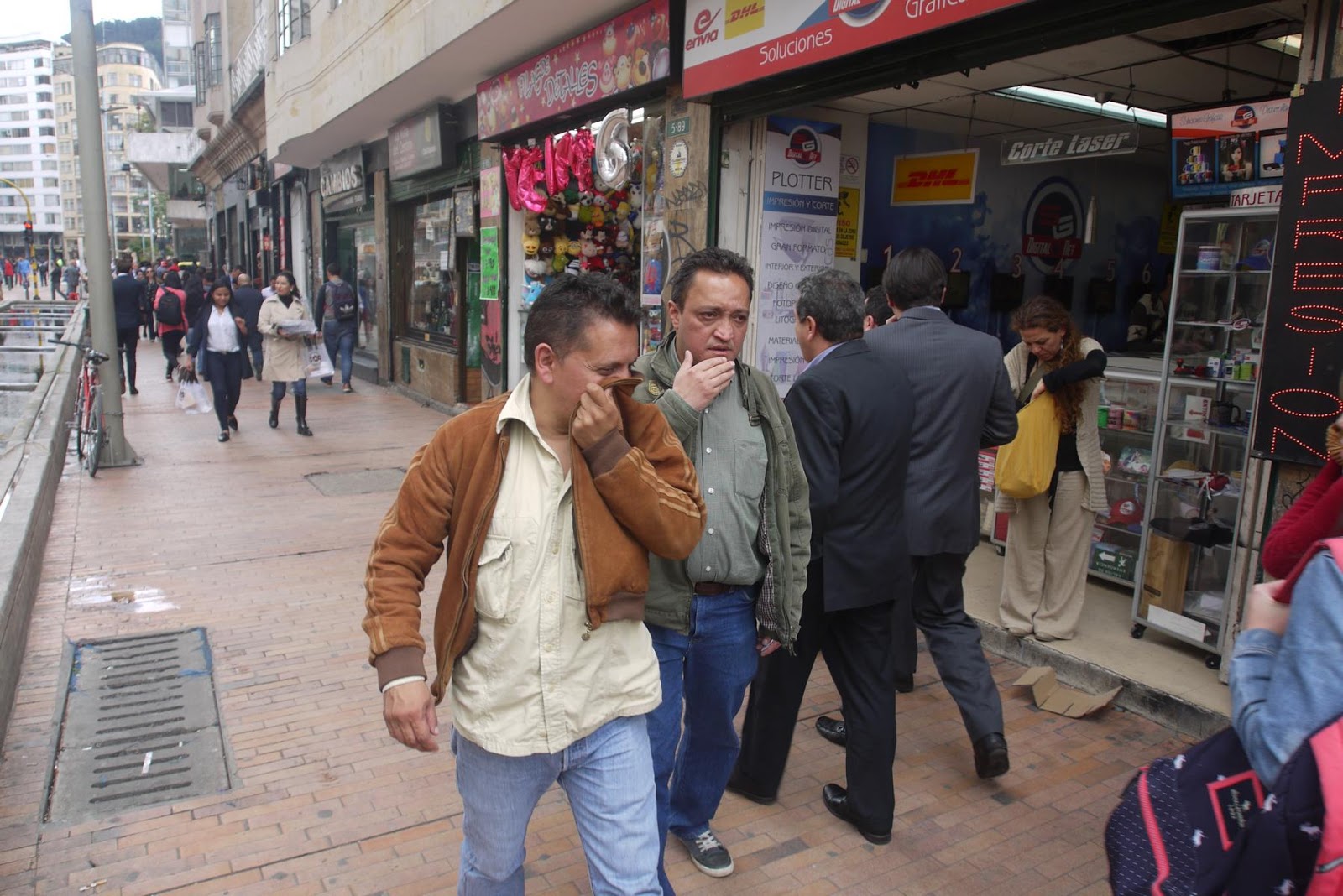
Those men you see every weekday along Calle Jimenez near Carrera 7 are emerald traders.

They show off, price and trade emeralds every day, right out in public. 
And, surprisingly, things rarely go wrong.


But, today, a disaster! A trader dropped a valuable emerald - and it went straight down into the sewer!

The emerald is down there, somewhere.
But where is it?


A homeless man, undoubtedly hired for a pittance, goes to work digging up the mud and carrying it away.


The odor from the fetid mud and sewage wasn't very nice.


Where is that little stone?
Passers-by are not amused.


Sifting thru the mud and trash, bit by bit.
Astonishingly, the trader found his stone, which someone told me was worth 30 million pesos - about U.S. $10,000. Wonder how many pesos the homeless man took home?

Neighboring businesspeople will not forget this.
By Mike Ceaser, of Bogotá Bike Tours

Wednesday, May 27, 2015

This Mine is Yours and Mine

Guaqueros, or fortune hunters, outside the Puerto Arturo mine. (Photo: Semana.com)

In an industry plagued by illegality, unsafe working conditions, tax evasion and violence, the mine was intended to be a model of legality and high standards: After a group of Texas investors purchased the legendary Puerto Arturo emerald mine from emerald czar Victor Carranza in 2013, they invested $50 million, they said, to bring it up to international standards of safety and production.

A woman offers bags of rough emeralds
in Bogotá's informal emerald market.
And, according to an acquaintance of mine in the emerald business, under Minería Texas Colombia, the huge mine had become a model operation in the Muzo region. He described carefully constructed tunnels and high security.

But then, two weeks ago, trouble struck - The miners uncovered a super-rich emerald vein. What should have been a bonanza for the company devolved into travesty as more than a thousand informal miners, some armed with guns and dynamite, tore down fences, despite the presence of security guards, soldiers and police, and invaded the mine to grab a share of the ore for themselves.

Diamonds in a window in
the emerald district.
"It is incredible that this can take place on private property, placing in danger more than 50 million dollars invested in machines and equipment. What's more, the lives of more than 800 of our workers are in play," the company told journalists.

The invaders, for their part, undoubtedly justified their actions based on a feeling of ownership: They were lifetime emerald miners in the area, which is overwhelmingly poor, so why should foreigners profit from this rich strike?

The Emerald Trade Center in central Bogotá. Some
told me that prices plummeted here after the big find.
The Texans evidently intend to persevere in their operations, in which they have invested so mightily - but presumably with stronger security.

In Bogotá's emerald district, the rich vein also had consequences. Another emerald dealer told me that prices of certain types of emeralds had plummeted. I was dubious, until I learned about how the Puerto Arturo episode had flooded the market.

Puerto Arturo is not only Colombia's largest emerald mine, but under Carranza's ownership also produced what were reported to be the world's largest and most valuable emeralds.

Traders examine emeralds on Jimenez Ave. in Bogotá.
In past decades, Carranza and other 'emerald czars' fought wars over control of the industry, in which hundreds of people were killed. And the region's emerald mines, despite employing many workers and producing a fortune in gemstones, pay remarkably little in taxes and royalties. Emerald mining, as with much of Colombian mining, continues to be dominated by danger and informality. With terrible regularity, informal gold mines, particularly in the Pacific Coast region, collapse or are flooded, killing dozens of miners. Unregulated (and some regulated) mines also devastate ecologically sensitive landscapes and poison rivers with cyanide and mercury.
Victor Carranza with huge emeralds.

Minería Texas Colombia's efforts to improve and formalize its mine are a step forward. But mining in Colombia badly needs more control to reduce its human and environmental tolls.


By Mike Ceaser, of Bogotá Bike Tours

Friday, May 15, 2015

Where Stones Become Jewels


Working the emeralds.
This afternoon, I visited one of the many emerald workshops around El Rosario Plaza. S mall place in a nondescript building, it turns out stones worth from a few bucks to thousands of dollars. Some of the products of this dark little den may later decorate the bodies of royalty and millionaires.

The most valuable stones from Bogotá's emerald district go to Japan, Hong Kong, New York and Europe. Like Colombia's coffee, the lower-quality stones stay here.

Emerald miner and trader Angel Torres, who showed me the workshop, told me that, even after centuries of exploitation, only a tiny percentage of Colombia's emeralds have been mined (but how can they possibly know?), so the industry has lots of life left in it. Torres also said that one large, foreign-owned mine has tunnels extending 4 or 5 kilometers underground. Talk about claustrophobia!
Rough emeralds, which will be slected, cut and polished.

Cut and polished emeralds.


Down below on Plaza Rosario two men study stones in what is the city's informal, open-air emerald market. 


Because of their pallid color, these stones will never be worth much.
The emerald cutters' building on the east side of Plaza Rosario.
Interested in emeralds? You can visit the workshop and learn about the stones by contacting Angel Torres at 312-752-9544 or angball40 (at) yahoo.es

By Mike Ceaser, of Bogotá Bike Tours

Thursday, February 19, 2015

Cleaning Up the Emerald Industry?

Taking a stand. Emerald dealers march yesterday on Plaza Rosario.
Emerald traders examine loose emeralds
 on the sidewalk by Carrera Septima and Jimenez Ave.,
the city's informal emerald market. 
Bogotá's emerald industry workers protested yesterday against a law which they fear will force them out of business or into illegality.

The law requires emerald workers, all the way from informal miners to exporters, to register and issue receipts and, of course, pay taxes. It also requires certificates of origin on all emeralds stating where they were mined.

The government says the law is intended to formalize an industry historically characterized by illegal and informal mines, as well as relationships with smugglers, drug traffickers, paramilitaries and other illegal groups. Many emerald mines have also historically been dangerous and have illegally employed children. In addition, the big emerald miners, popularly known as 'czars', have sometimes waged violent war among themselves, killing thousands.

Ready to formalize? Emerald miners toil amidst
head and mud. (Photo from: Pacifista)
Many observers have also noted that, despite the huge mines in Muzo and other places, the industry pays few taxes.

But is this law realistic? Are its demands practicable? If not, it will just transform many emerald workers from being being just informal to being outright illegal.

Emeralds in a window of the Emerald Trade Center on Jimenez Ave.
Loose emeralds for sale. 
The Emerald Trade Ceneter on Jimenez Ave. in La Candelaria.
By Mike Ceaser, of Bogotá Bike Tours

Sunday, July 28, 2013

A Sixteen-Year-Old Assassin

Jimenez and Ave. Septima, Bogotá's
open-air emerald market.
 When an emerald dealer was gunned down in broad daylinght last Thursday on one of Bogotás most iconic intersections, it probably didn't surprise many.

After all, emerald industry observers had feared violence between rival 'emerald czars' after the death from cancer last April of Victor Carranza, who had ruled the industry for decades.

And last week's victim, Pedro Libardo Ortegón, 64, reportedly had been close to Carranza, even carrying the dead kingpin's coffin at his funeral. Reportedly very wealthy, Ortegón had in the past been linked to paramilitarism and to real estate of questionable origin had been listed under his name.

But I was struck by a different aspect of the crime - the killer was 16 years old.

Is it my imagination, or are fewer esmeralderos
hanging out on the street these days?
According to El Tiempo, the child assassin was recruited in a pool hall in the poor and violent Ciudad Bolivar by unidentified men offering 5 million pesos for the murder. They gave him 2 million pesos up front.

Why would any young man, with his life in front of him, accept such a proposal? Was he a drug addict? Spellbound by the prospect of more money than he could imagine? Was he or his family threatened?

The cowardice and unprincipledness of the men who hired the boy can't be overemphasized. Willing to commit murder, but too cowardly to do it themselves, they didn't mind risking a child's life and future to do their dirty work.

The boy found Ortegón at 3:30 in the afternoon on Jimenez street between Carreras 7 and 8, the center of the open-air emerald market, and shot him in the neck with a silencer-equipped pistol. The boy then ran east on Jimenez Ave., but was captured by other emerald dealers, who might have killed him if police hadn't interceded.

Because he's a minor, the killer will likely only serve a few years. But this crime will follow him his whole life - as it should.

And let's just hope this isn't just the first of more crimes by this boy.

By Mike Ceaser, of Bogotá Bike Tours

Friday, April 5, 2013

The End of an Era for Emeralds?


Victor Carranza with one of his giant emeralds.
The death of Victor Carranza, known as the emerald czar, may mark the end of a wild chapter in Colombia's emerald industry, marked by sudden fortunes, larger-than-life personalities and explosions of violence.

Born in 1935 in Boyaca, Carranza built an emerald empire, using both legal and illegal means. During his long career, he was also linked with narcotrafficking and paramilitarism. But, magically, multiple legal cases against him were mysteriously shelved again and again.

"Media such as El Tiempo investigated and repeatedly denounced these facts, but prosecutors took no strong measures," El Tiempo observed dryly .

Carranza's enemies and business rivals also tried to murder him many times. The so-called 'Green Wars' between emerald czars in the 1960s and '80s killed thousands - but not Carranzo. In the end, it was prostate and lung cancer that got him.
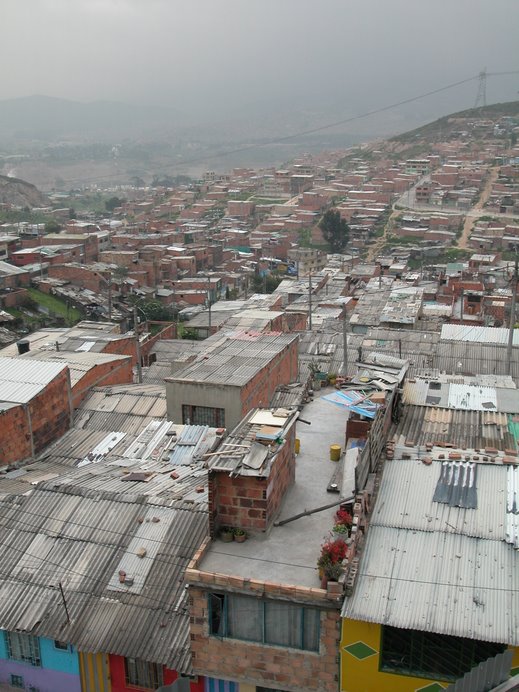
A street in the impoverished town of Muzo,
home to some of the globe's richest emerald mines.
(Photo: El Tiempo)

Carranza's rise from poverty to an emerald empire probably will not be repeated. Today, the industry is becoming corporatized - Carranza himself was in partnership with a Houston, Texas mining company in Muzo, Boyaca, the epicenter of world emerald mining. In recent years, as the easily-found stones have been cleaned out and mines have gone deeper, making a living as a guaquero, or wildcatter, has become more and more difficult. The poor people who sift thru mine tailings for emeralds the mine missed say the stones are becoming scarcer and scarcer.

An emerald-dealer friend has told me about the old days, when he and a group of other miners would head out into the wilderness and start digging, looking for a vein of emeralds. Sometimes they'd get lucky; sometimes, the mineshaft would collapse, burying the miners inside.

Colombia is still the world's largest producer of emeralds, and its stones are of particularly high quality. However, this industry, worth more than $100 million per year, and the source of huge fortunes like Carranza's, has left the majority of the residents of Muzo in poverty.

With Carranza's death, officials in Boyaca's emerald region fear that the violence could restart.

Lessons for Another Violent Colombian Industry?

As troubled as the emerald business has been, it looks decidedly peaceful compared with another Colombian industry: illegal drugs. And there might be a lesson in that.

El Espectador reports that during the Green War of the 1960s the emerald industry was mostly illegal. In 1973, the government shut the illegal mines and auctioned them off. One of the major buyers was Victor Carranza.

After that, the industry remained relatively quiet for decades, until narcotraffickers invaded the region in the 1980s, according to El Espectador. Violence raged again until the emerald miners, with the intermediation of the region's catholic bishop, signed a peace treaty in 1990.

A fragile peace has held ever since, altho several recent killings have the emerald region on edge. Recently, 20 emerald miners signed a peace treaty intended to head off possible confrontations. Carranza himself has been an advocate for peace - which is, after all, good for business.

Some observers now fear that Carranza's death could destabilize things and trigger another Green War. But Msr. Luis Felipe Sánchez, the bishop of Chiquinquirá, told El Tiempo recently that things have changed. There's less money in the region now, and more government control, he said. Also, there's less coca, "which produced more violence than did the emeralds."
Bishop Luis Felipe Sánchez has overseen peace
treaties among emerald miners. (Photo: El Tiempo)

The similtarities between emeralds and cocaine are obvious: both are valuable, highly-desired commodities dealt in by aggressive, less-than-scrupulous businessmen. But there's one fundamental difference: emeralds are legal, while cocaine is not. Because of that difference, the government can try to mediate emerald conflicts; Emerald miners can sue each other instead of killing; And religious leaders can endorse peace treaties.

Update...

Today's El Tiempo has two articles with interesting details about Carranza, including how he starting out in a small town carrying sacks of potatoes for his mother, who worked in a local market, and eventually headed Forbes magazine's list of the richest Latin Americans. As a young man, Carranza supposedly spent several years in prison for killing a man who tried to steal his emeralds. He would later spend several more years in detention - and then be absolved and compensated by the state.

Carranza and his immediate family employed 100 bodygaurds, according to El Tiempo, 20 of whom lived in Carranza's luxury apartment in north Bogotá. Carranza's bedroom could be entered only by entering a secret code which unlocked the armored door.

Carranza was implicated in massacres, paramilitarism and drug trafficking, but none of those charges ever stuck. In the end, he worked for peace in the emerald business - obviously, for a man who controlled 40% of the industry, peace meant profits.

By Mike Ceaser, of Bogotá Bike Tours

Monday, January 21, 2013

Blood Emeralds?


An emerald seller displays some inexpensive stones on Bogotá's 'emerald corner.'
Victor Carranza with a big find.

Colombia is emerald country. It produces more than half the world's supply of the stones - and high quality ones.

But the story of these green gemstones, which are mined primarily in Boyaca Department, near Bogotá, is tinged blood red.
Women admire emeralds in the window of
Bogotá's Emerald Trade Center.

Details of that history are spilling out in recent declarations by imprisoned paramilitary leaders. They say that Victor Carranza, the fabulously wealthy emerald king, or 'Emerald Czar', worked with right-wing death squads, even collaborating in two massacres of campesinos in 1997.

Carranza denies the accusations. And, impressively, the multiple court investigations against him have always been shelved. Carranza is a legend. Despite having only a third grade education, he rose from humble roots to amass a fortune in emeralds and ranching. The world's two largest emeralds belong to him. But while Carranza and a few others have built emerald empires, innumerable guaqueros, or informal miners, live in misery sifting thru the waste piles around their mines.

A street in Bogotá's emerald district,
in La Candelaria, the historical center.
The emerald industry has long been a violent one. The 'Green War' between emerald kings in the late 1980s left more than 2,000 dead before the industry's kingpins made a peace agreement which consolidated their control over the industry. Late last year a spate of killings in Boyaca generated fears that another emerald war was brewing.

Carranza, 77, has survived a half-dozen assassination attempts, (including at least one bombing), legal investigations and the 'green war.'Now, Carranza appears likely to die of his incurable cancer before either the courts or his rivals get him.

Children dig for emeralds. (Photo: Canal Azul)
By Mike Ceaser, of Bogotá Bike Tours


Wednesday, December 21, 2011

La Candelaria: Emerald Country

Eye on the stone:Studying an emerald in Bogotá's open-air emerald market. 
In addition to being Bogotá's historical and cultural center, La Candelaria is also an emerald market - and perhaps even the world's premier emerald market. After all, Colombia produces more than half of the world's emeralds, lots of them mined around Bogotá. 

So, what Christmas gift could be more Colombian, or even La Candelarian, than an emerald?

Streets 12b and 12c between Carreras 5 and 7 have lots of jewelry stores, as does the Jimenez Ave. around Seventh Ave. But perhaps the most interesting emerald market is the open air one which forms every day on the southern sidewalk of Jimenez Ave., just west of Seventh Ave. On weekdays, you'll see dozens of men standing about here, and if you look closely you'll notice they're carrying sheets of paper, in which they hold their emeralds. Now and again, one will hold a stone up to the sky to check it for defects.

The rule here is 'buyer beware': a stone's value varies depending on its size, cut, its transparency and the depth of its green color. Unethical traders can doctor emeralds to hide their defects. And, of course, the unwary may go home with a sparkly piece of glass. Many of the dealers will offer you a certificate - but outside of Colombia that certificate may be nothing more than a piece of paper. 

Remarkably, even with thousands of dollars in stones changing hands here every day, I've never heard of one getting lost or stolen.  

Men at work in La Candelaria's open-air emerald market by the intersection of Seventh and Jimenez Avenues. 


An emerald shark. 


A little emerald-carrying burro in the window of the Emerald Trade Center on Jimenez Ave. 

You can also visit the Emerald Museum, located across the street from the Gold Museum. But, inexplicably, they prohibit taking pictures inside!

Related entry: The world's biggest emerald - or not!

By Mike Ceaser, of Bogotá Bike Tours