|
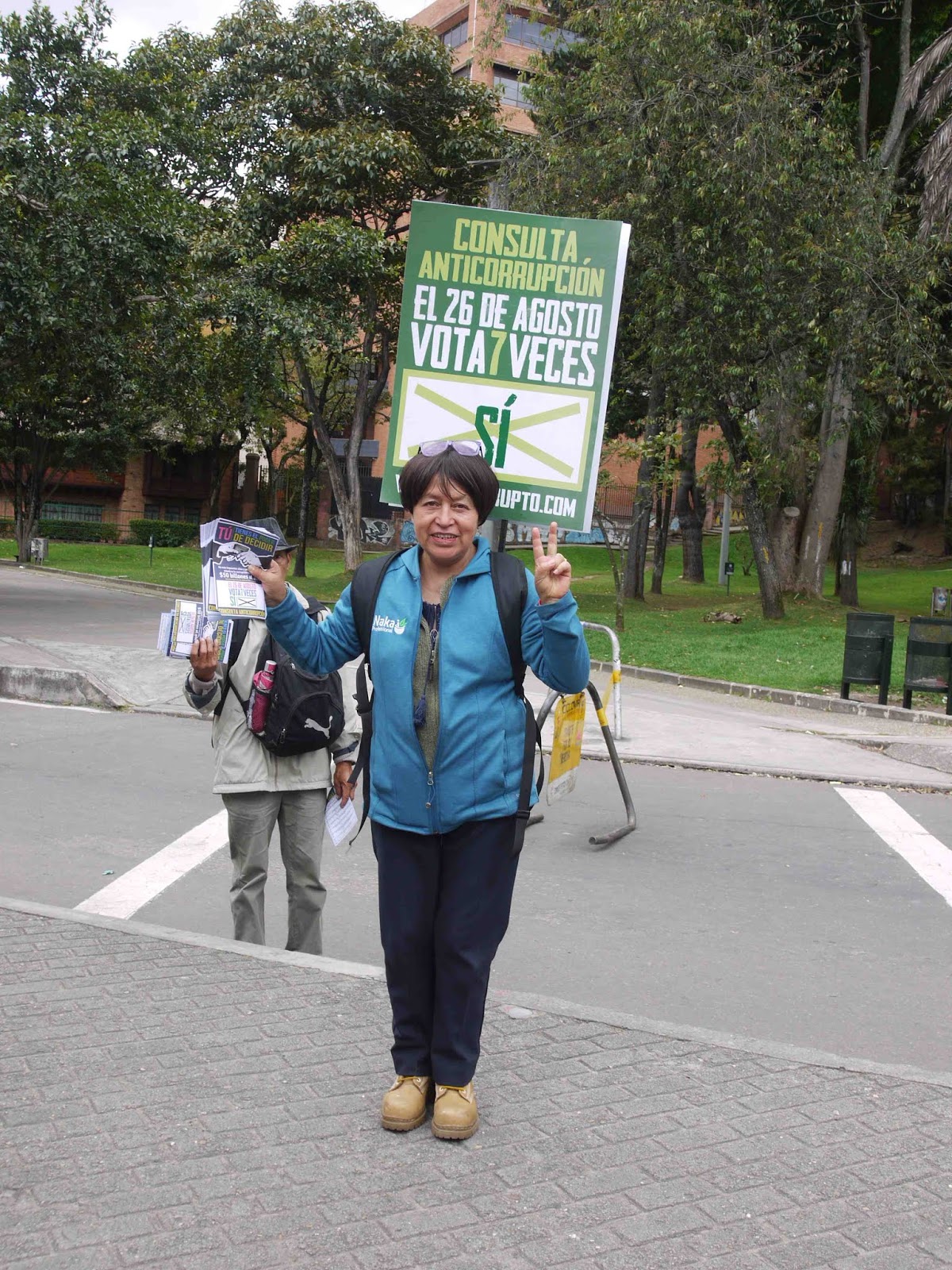
| 'Yes to peace,' at a rally on Carrera 7. |
The peace agreement signed with the FARC guerrillas will be a huge milestone for Colombia if citizens vote to approve it on Oct. 2. Whichever side wins, however, loses legitimacy if it bases its campaigns on lies and distortions:
'Si' Campaign: Pres. Santos claims that '
Colombia's war is over.'
Perhaps Santos forgot that the smaller ELN guerrilla group has not entered negotiations and has even launched an offensive in recent months. And that Colombia has myriad other violent outlaw organizations, including the
bacrim and paramilitaries, some of which control territory. A few months ago, the government even authorized the military to bomb criminal groups' campsites. That sounds like war to me.
The peace deal is only one single step towards peace.
'No' Campaign: The Deal Will Bring
Castro-Chavismo to Colombia. (In other words, it will transform Colombia into Cuba/Venezuela.)
This is a tough charge to understand, since the Cuban and Venezuelan economies are so different. Cuba is a communist dictatorship, while Venezuela is still capitalist, albeit with lots of government control and media and democracy under siege.
In reality, the peace agreement is supposed to increase regional participation in decisionmaking and promote land redistribution to poor peasants, but it will not fundamentally alter Colombia's capitalist, free market economy. If it did, can you imagine Washington backing the deal?
 |
| 'Let's stop this war now!' Well, maybe, kinda. |
'No' Campaign: The agreement means that Colombia has surrendered to the guerrillas.
Actually, just the opposite is true. The FARC are a Marxist, revolutionary group whose have fought for more than a half-century to overthrow the Colombian government and replace it with a communist state. By making peace, they recognize their failure and resign themselves to working within the democratic, capitalist system.
'No' Campaign: The deal hands the guerrillas control of Colombia's government.
This claim is absurd. The guerrillas will receive ten guaranteed seats in a Parliament with several hundred members. That'll make them a marginal force, and, given the guerrillas' history of atrocities, other leftist parties will keep their distance from them.
'Si' Campaign: The Peace Agreement Will Jumpstart Colombia's Economy.
Well, perhaps. Less violence will increase investors' confidence and attract more tourists. It will also open more regions of the country to mining, petroleum and other sorts of development. Colombia will also reduce its security and military expenses. If thousands of ex-guerrillas turn to agriculture or factory work, they will also grow those sectors.
However, the peace deal also means huge expenses, such as compensating victims, removing land mines and retraining ex-fighters. I've seen estimates that Colombia requires US $50 billion, an impossible sum.
'Si' Campaign: The peace deal will be a boon for the environment.
Partly true. The guerrillas - including the ELN, who continue fighting the government - have committed many environmental crimes, in particular blowing up oil pipelines. And drug crops, which the guerrillas tax and protect, cause lots of deforestation.
However, without guerrillas terrorizing ranchers and industries across rural Colombia, expect agriculture to expand and mining and oil industries to invade virgin lands. That will accelerate pollution and deforestation.
'No' Campaign: The deal means impunity for guerrillas who've committed human righs abuses.
This one's true. Guerrillas, as well as soldiers and others, who confess their crimes will serve symbolic sentences, where they'll likely be restricted to a single municipality, of something similar. That's a far-cry from prison time. However, as many have pointed out, as long as the conflict continues, so does widespread impunity.
In short, the peace deal is imperfect, and its results will be mixed. However, it will be a step toward a more peaceful Colombia.
By Mike Ceaser, of
Bogotá Bike Tours


 Posts
Posts