|
| Are they real, or just virtual? |
Case One: For months, our building's sewage system regular crisis. During hard rains, the
wastewater would back up and come flowing up out of the bathroom drain, obliging all of us to grab mops and buckets and clean the mess up.
The landladies, who live upstairs, didn't care - until it happened to them. Then, they hired laborers to clean and rebuild the house's pipes. Then, the only step left was for the city's
Acueducto, or Water, department, to hook the house's pipes up to the city sewer line.
That was months ago, and we're still waiting.
One of the landladies, who has physical and psychological problems, has visited
Acueducto at least a half dozen times, and come back with promises that they would do the work 'in a few days', 'in a week', 'in a month', etc. They even wrote '
Emergencia!' in big letters on one of the work orders. They've broken all their promises.
To compound the situation's absurdity, the last time the landlady visited
Acueducto, they told her she needed to first go get permits from the city's Transit and Public Space departments. And then come back to acueducto.
Shouldn't the water department, rather than the homeowner, have the responsibility of coordinating with the transit department about planned street work? And if they do want the homeowner to do the city employees' job, shouldn't they have told her this the first time she visited, months ago?
Or is all this delay and run-around their way of saying '
You need to grease my palm to get anything done'?
 |
'God and Fatherland.'
And where does the
public service come in? |
Case Two: More than two months ago, a foreigner who has lived in Colombia for years was walking down a Candelaria street when a youth stabbed him several times in the back.
The foreigner almost died of blood loss, spent more than a month in the hospital, underwent a half dozen surgeries, lost a piece of one kidney, and is now at home recuperating.
Meanwhile, what have the police done about this attempted murder? The police '
investigador' only interviewed the victim more than two weeks after the attack - and only after we complained to his superiors - and more than two months after the crime he has not talked to the witness. The street has many video cameras which might have captured the attack, but the
investigador hasn't looked at the videos. Instead, he gave the victim's teenage son a letter authorizing him to obtain the videos.
"He wants me to do his job," the son says.
A Colombian acquaintance who works in a La Candelaria hotel had a similar experience after being stabbed in an attempted mugging. He went down to the police station and placed the
denuncia, but hasn't heard from the cops since.
How many people have these criminals robbed, attacked or even murdered since? But identifying and catching them seems to carry a much lower priority with the cops than, say, shaking down kids for smoking pot or stopping tour guides for working without the benefit of a Sena certification.
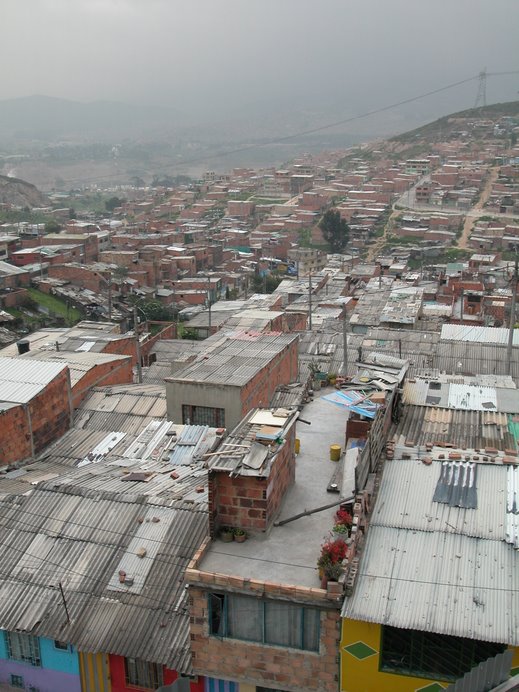
And if the public institutions are this apathetic and abusive here, in central Bogotá, in one of the city's more important neighborhoods, the heart of its tourism industry, then what happens when someone needs help in Usme, Kennedy, Ciudad Bolivar or some other
barrio popular?
Yet, the really remarkable thing is that Colombian institutions actually work
WELL compared to those in many neighboring countries, such as Venezuela and Bolivia. Hundreds of thousands of Venezuelans have sought refuge in Colombia because of the astronomical levels of corruption and criminal violence there (as well as the collapsing economy and hyuperinflation).
In Bolivia, where I lived some 15 years ago, the public institutions seemed designed primarily to squeeze money out of the people they were supposed to serve. There, my landlady's telephone would get cut off periodically, and she'd have to go down to the phone company and pay someone a bribe to get it turned back on. And the police seemed to make a practice of arresting people in order to force them to pay a bribe to be released - a form of institutionalized state kidnapping for ransom.
By Mike Ceaser, of
Bogotá Bike Tours


 Posts
Posts